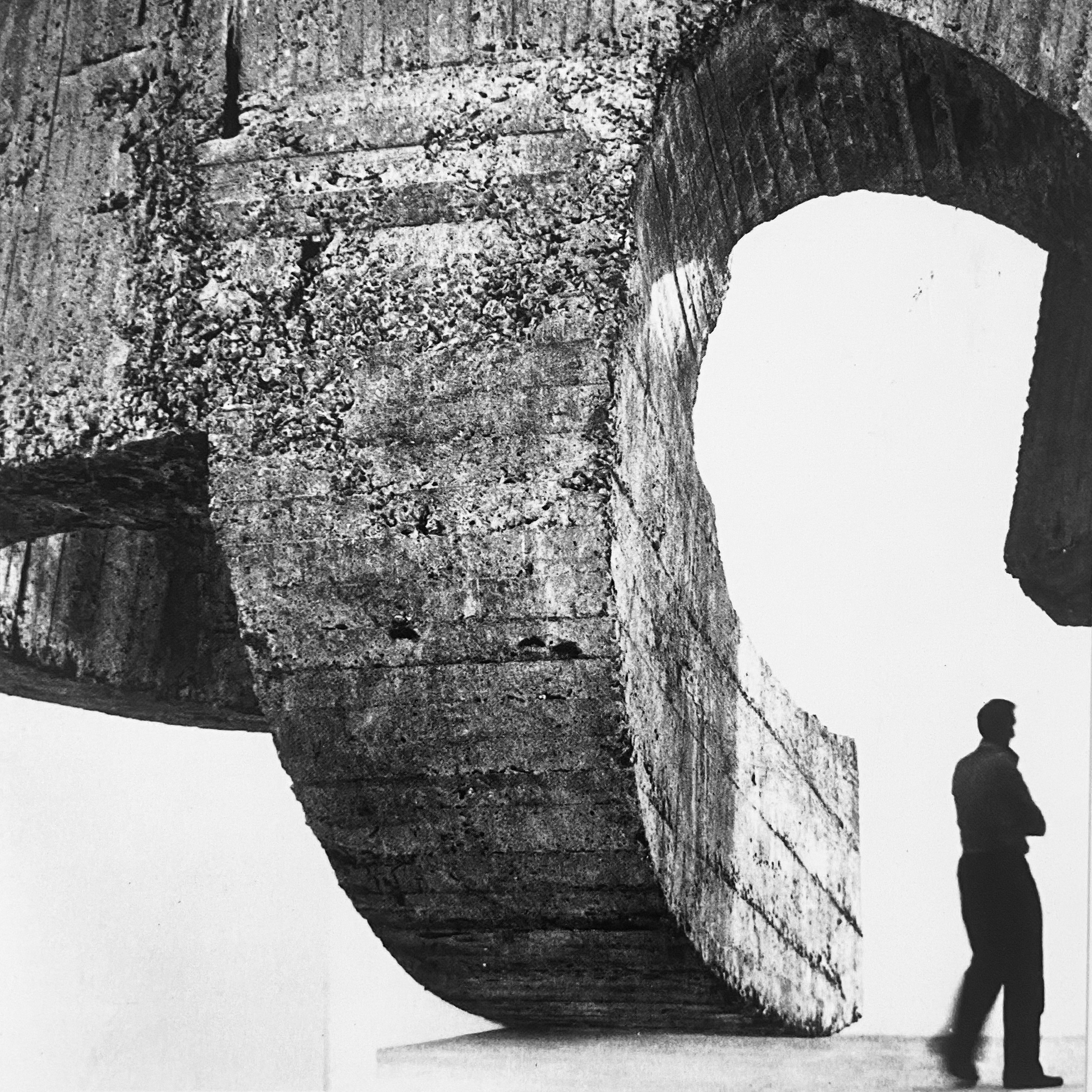
In particular, we distinguish the plasticity of reinforced concrete, and especially the massive sculptures for which eminent artists have, with happiness, abandoned natural stone.1
– Bernard Zehrfuss and Pierre Faucheux
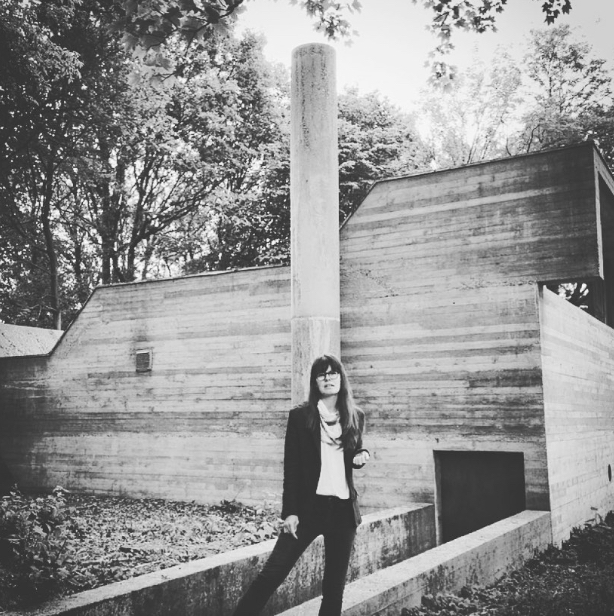
About me: Angelique Campens is an art and architecture historian, curator, and writer specializing in the intersections of sculpture and architecture, monumental public sculpture, and sculptural concrete (béton brut). Her forthcoming book, Beyond Brutalism and The Postwar Architecture–Sculpture Network, will be published by Routledge in late 2025
She has curated exhibitions at leading international institutions, including The Kitchen and the Whitney Museum in New York, Kulturprojekte Berlin, Fondazione Sandretto Re Rebaudengo, BOZAR, and WIELS. In 2007–2008, she was a Curatorial Fellow at the Whitney’s Independent Study Program (ISP).
In addition to curatorial work, she has contributed to catalogues and journals such as Taschen’s Art Now Vol. 4, Abitare, Domus, Sculpture Journal, and Aspect. She previously published a monograph on architect Juliaan Lampens (2010) and a recent monograph on artist-architect Jacques Moeschal, accompanied by a curated exhibition at BOZAR.
In 2022, she earned a PhD from Ghent University on André Bloc’s pivotal role in the postwar architecture–sculpture debate. She teaches at KASK / School of Arts Ghent and serves as Review Editor for Public Art Dialogue (Taylor & Francis). She also initiated and leads a think tank on experiencing art in public space, from which a podcast emerged. The project fosters dialogue on art’s role in urban environments, bringing together artists, architects, theorists, and students through site-specific discussions and educational programs.
Focused expertise:
Publication and work done on Juliaan Lampens: read more
Work on Jacques Moeschal: read more
Phd Béton Brut: André Bloc and the architecture-sculpture debate: read more
Contact: angeliquecampens@gmail.com
1 Bernard Zehrfuss and Pierre Faucheux, “L’Exposition: cent ans de béton armé,” L’Architecture d’Aujourd’hui, no. 27 (December 1949): VIII. Translated by the author.
