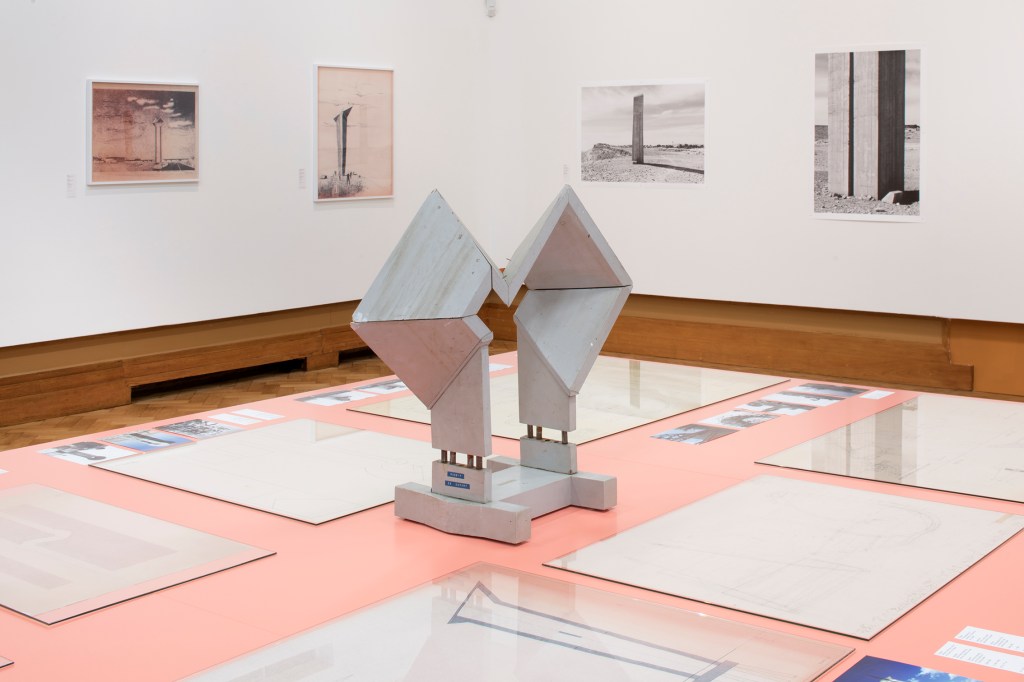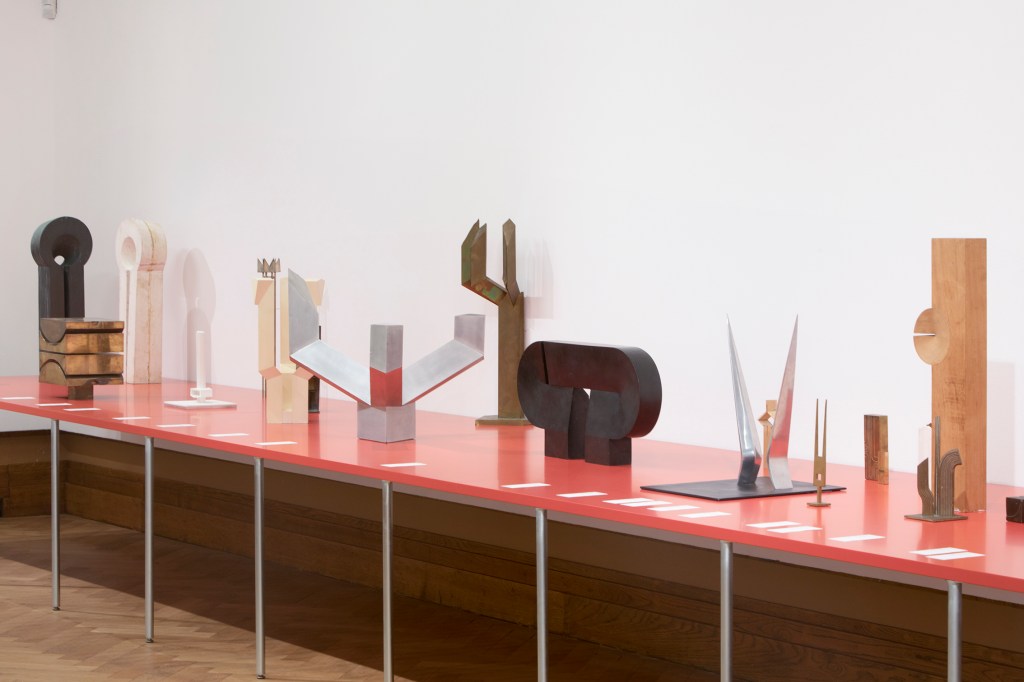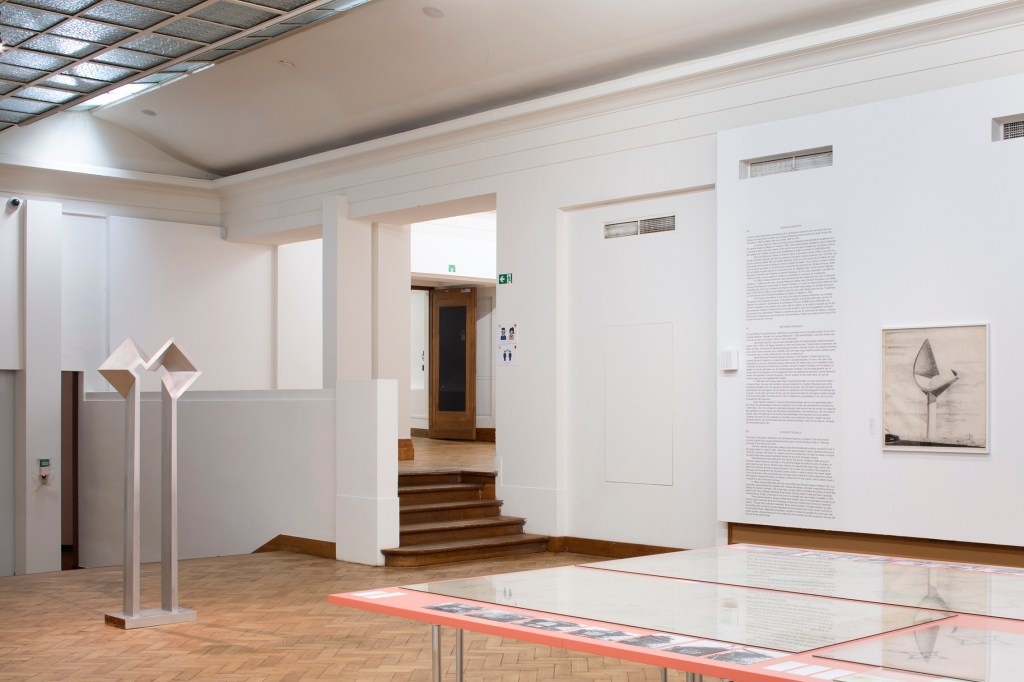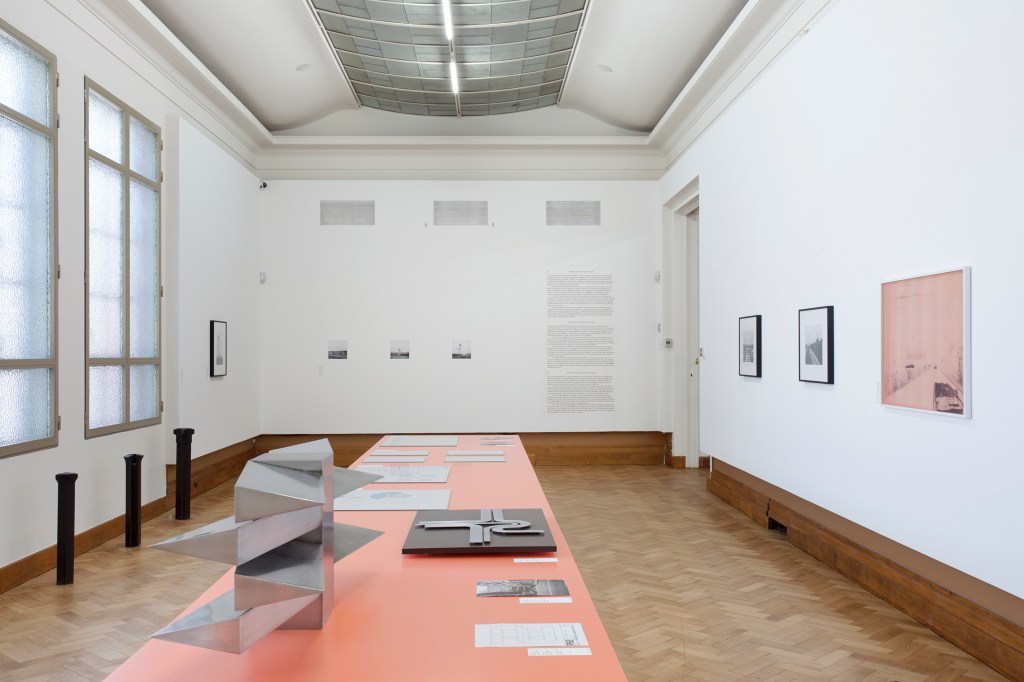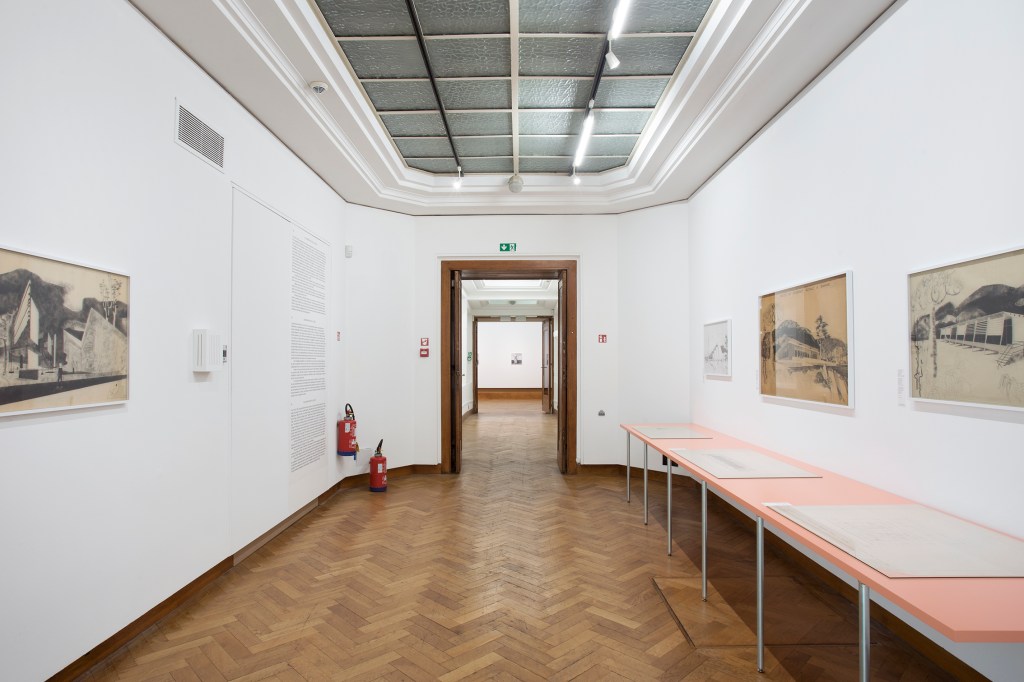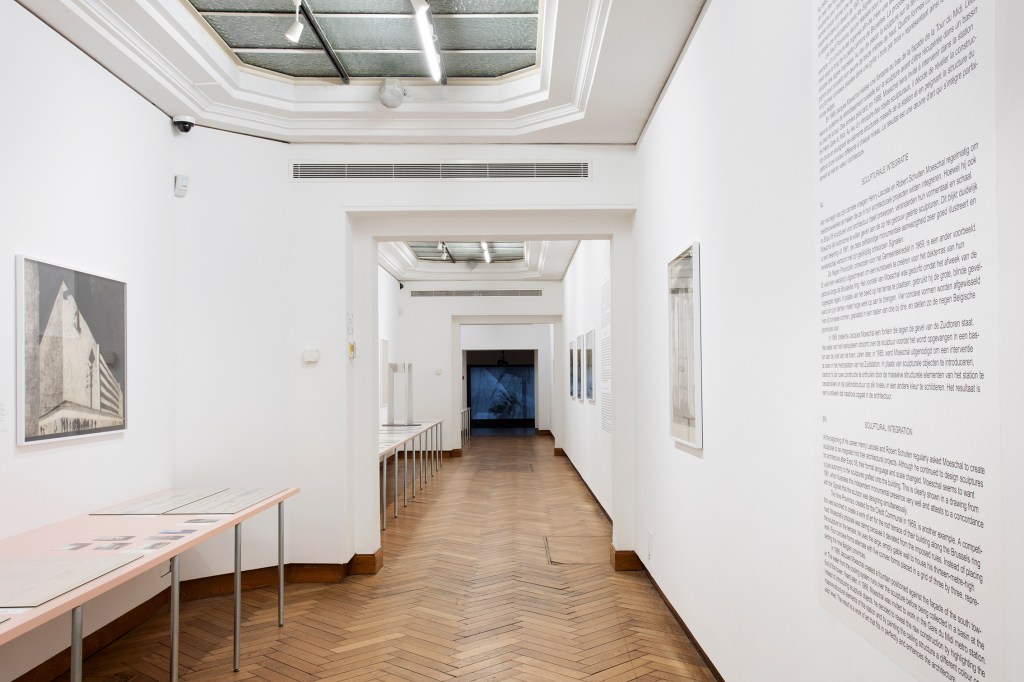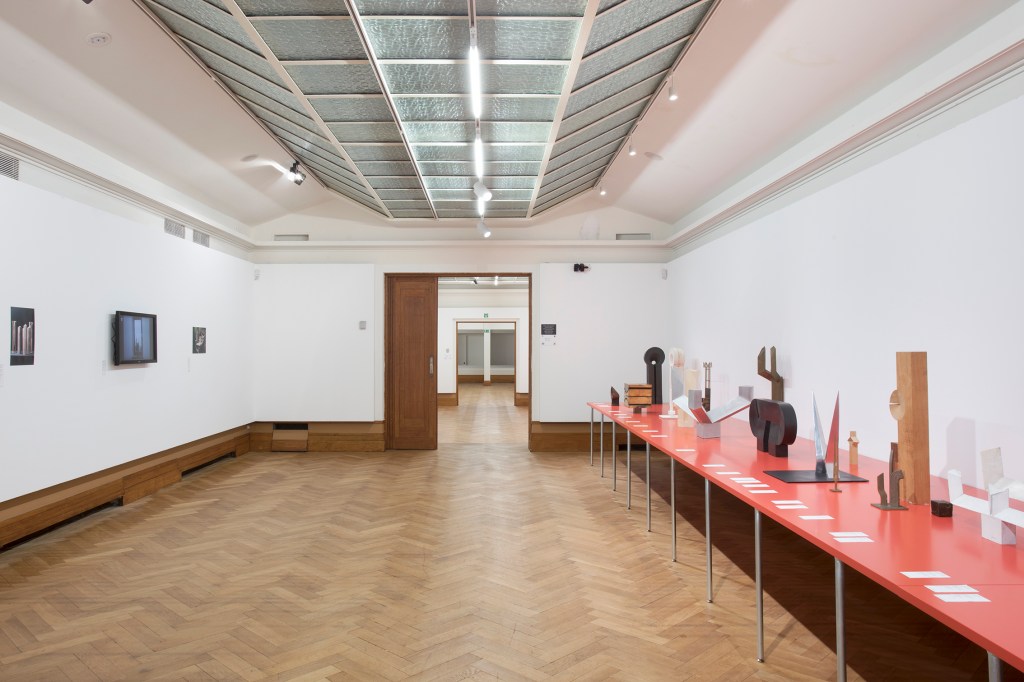
Belgian artist and architect Jacques Moeschal (1913–2004) wanted to bring art to the urban environment, breaking down the boundaries between sculpture, architecture and the landscape. Although his work as an architect is under-recognized compared with his artwork, his background in architecture was fundamental to his creation of monumental sculpture. The thin line between sculpture and architecture defines Moeschal’s oeuvre. Moreover, his few theoretical texts show how his work was embedded within the larger international discussion of the time: namely the ethical demand that art should be made available to a broader public and that it should be integrated with architecture, public space and everyday life.
Moeschal gained international acclaim through his role as the Deputy-Chairman of the International Sculpture Symposium, his participation in several symposia, and through the Civil Engineering Pavilion at Expo 58 in Brussels. It was with his experience at the World Fair that his practice pivoted towards architecturally-scaled sculptures. (…)

His desire to work in public spaces was enhanced by his role as the Deputy-Chairman of the International Sculpture Symposium. The topics discussed in these symposia usually dealt with sculpture in public spaces and promoted sculpture on a monumental scale. His involvement would become the basis for the construction of his Signals sculptures along the motorway. By installing these Signals, he contributed to growing discussions on public art. Moeschal was the key figure in cementing the place of concrete sculptures on the roadside. Through his energetic network built through winning institutional support (such as the Belgian Ministry of Public Works, Brussels and the Intercommunal Transport Company), his conceptualization would become a driving force in the internationalization of concrete sculpture along the road.
***
Publications:
Jacques Moeschal: Architecture Sculptures
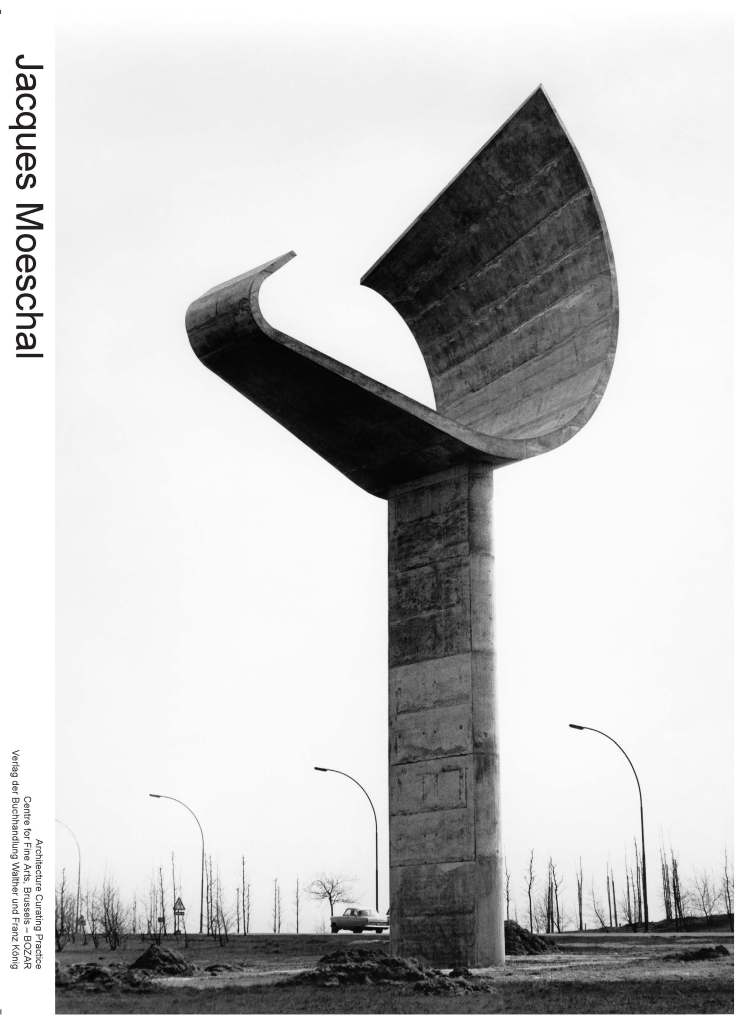
This publication delves deep into the archives of sculptor-architect Jacques Moeschal (1913-2004), known for his monumental concrete sculptures that turned Belgian car trips into art trips. His highly detailed design drawings are works of art in themselves, reproduced here on two papers alongside historic photographs. It zooms in on the relationship between art and architecture in the underexposed oeuvre of Moeschal, through rare archive materials, such as sketches, technical drawings, models, photographs, as well as contemporary images. Contemporary artists including Kasper Akhøj and Barney Kulok demonstrate how Moeschal’s work remains relevant today.
Concept by Angelique Campens and edited by Angelique Campens, Roxane Le Grelle & Iwan Strauven. Brussels 2021. 22 x 31.5 cm. 180 p. with partly col., partly full-page. ill., bibliography, paperback.
With contribution by Kasper Akhøj, Angelique Campens, Francelle Cane, Adrien de Hemptinne, Maxime Delvaux, Valéry Didelon, Ann Veronica Janssens, Barney Kulok, Sophie Lauwers, Roxane Le Grelle, Jacques Moeschal, Iwan Strauven
Designed by Justine De Spiegelaere.
ISBN: 9783753300351
https://www.buchhandlung-walther-koenig.de/
Jacques Moeschal, Signal
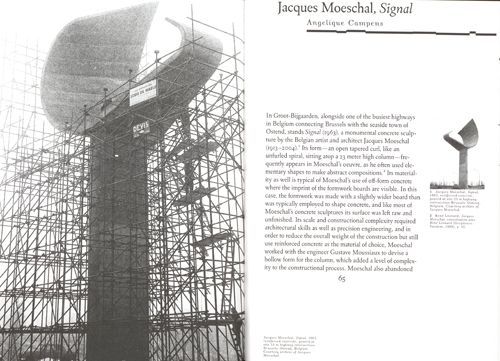
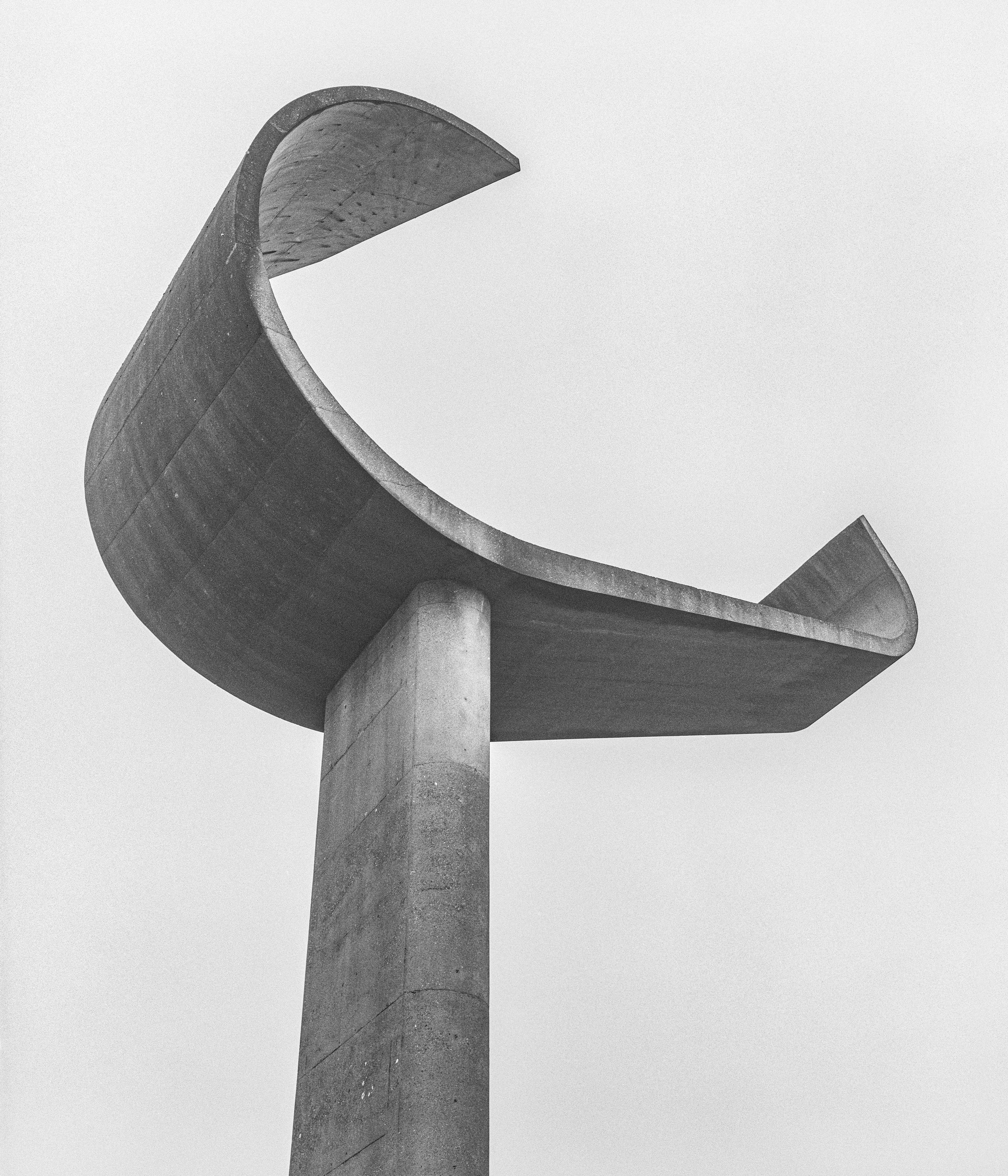
In Groot-Bijgaarden, alongside one of the busiest highways in Belgium connecting Brussels with the seaside town of Ostend, stands Signal (1963), a monumental concrete sculpture by the Belgian artist and architect Jacques Moeschal (1913–2004). Its form—an open tapered curl, like an unfurled spiral, sitting atop a 23 meter high column—frequently appears in Moeschal’s oeuvre, as he often used elementary shapes to make abstract compositions. Its materiality as well is typical of Moeschal’s use of off-form concrete where the imprint of the formwork boards are visible. In this case, the formwork was made with a slightly wider board than was typically employed to shape concrete, and like most of Moeschal’s concrete sculptures its surface was left raw and unfinished. Its scale and constructional complexity required architectural skills as well as precision engineering, and in order to reduce the overall weight of the construction but still use reinforced concrete as the material of choice, Moeschal worked with the engineer Gustave Moussiaux to devise a hollow form for the column, which added a level of complexity to the constructional process. Moeschal also abandoned (…)
In: Trading Between Architecture and Art : Strategies and Practices of Exchange, ed. Wouter Davidts, Susan Holden, and Ashley Paine (Amsterdam: Valiz, 2019): 64-73
Concrete sculptures along the road: Moeschal, Székely and Goeritz in the 1960s

This article examines a series of projects and proposals concerned with sculptures built alongside highways. It aims to illuminate an understudied history of architectural sculpture in concrete (béton), taking us beyond the traditional canon or works. These sculptures are significant within the history I trace because they are not merely influenced by architecture, but actively engage architectural forms as part of their construction of a shared private–public space along the roadside. By analysing categories such as scale, shape, mass, proportion, technological principles and the materials of the work, alongside the public context, my broader research agenda is to trace the ways in which architecture figures within and against these sculptural works. The article also traces some of the history of how art along the highway was connected through the network of the International Sculpture Symposium. The ideas that were disseminated by the different International Sculpture Symposia were important to an increasing degree and for bringing art out of museums and into public space.
In: SCULPTURE JOURNAL 27.2 (2018): 205–223.
***
Exhibition
Jacques Moeschal: Architecture Sculptures
From May 19 to September 19, 2021
Bozar, Brussels
The exhibition zooms in on the relationship between art and architecture in the underexposed oeuvre of Moeschal, through blueprints, film excerpts, models, and interventions by contemporary artists.
contemporary artists: Kasper Akhøj, Ann Veronica Janssens, Barney Kulok
curator: Angelique Campens
co-curators: Roxane Le Grelle and Iwan Strauven