
The architecture of the Belgian Modernist Juliaan Lampens (1926) goes beyond designs for conventional living and instead suggests a utopian avant-garde of living without barriers. He experimented with the use of raw concrete and created sculpture-like exteriors leading onto open vistas.
book / exhibition / other publications / thesis
***
INTRODUCTION Angelique Campens
‘Each architect automatically creates a permanent exhibition. Each building is a sculpture.’
— Juliaan Lampens
The architecture of Juliaan Lampens (b. 1926) moves past conventional living towards the utopian avant-garde vision of living without barriers. In 1950, Lampens started his own business in Belgium (in Eke, a village in the neighbourhood of Ghent) as a more or less conventional architect. After going to the 1958 World’s Fair in Brussels, he radically changed course and decided to build a home for himself in 1960. This construction proved to be a turning point in his career. Indeed, Lampens was profoundly influenced by the fair. As he once stated: ‘Every healthy Belgian visited the world’s fair. It was due in part to the world expo of modern architectural styles that such work became accepted and established in Belgium. The masses saw the possibilities of technology and started to believe in modern architecture, and I felt that the climate was ready to build in a modern way in Belgium.’ In general, there was a celebration of forms, materials and technology, but no uniform style that characterised the fair.
(….)
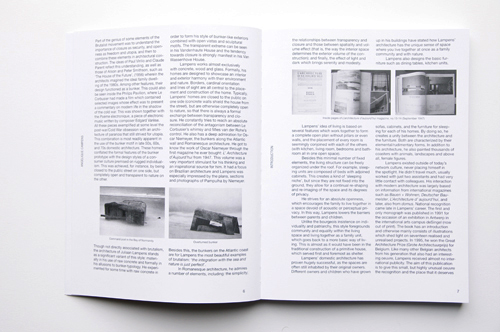
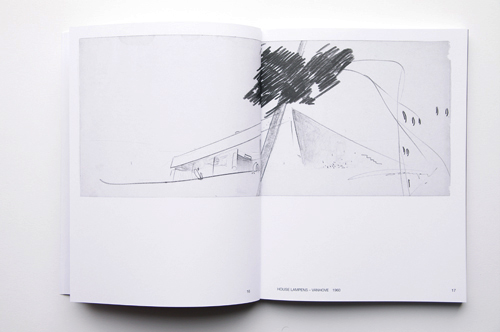
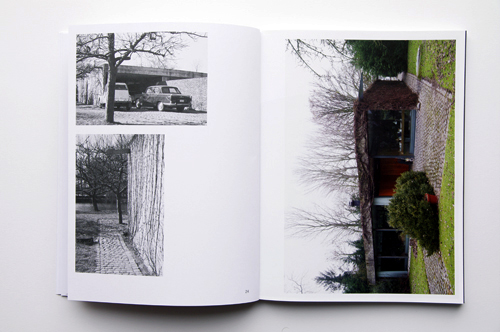
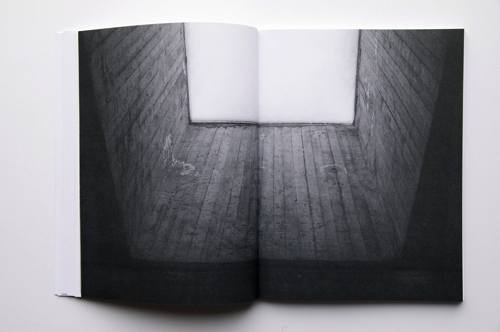
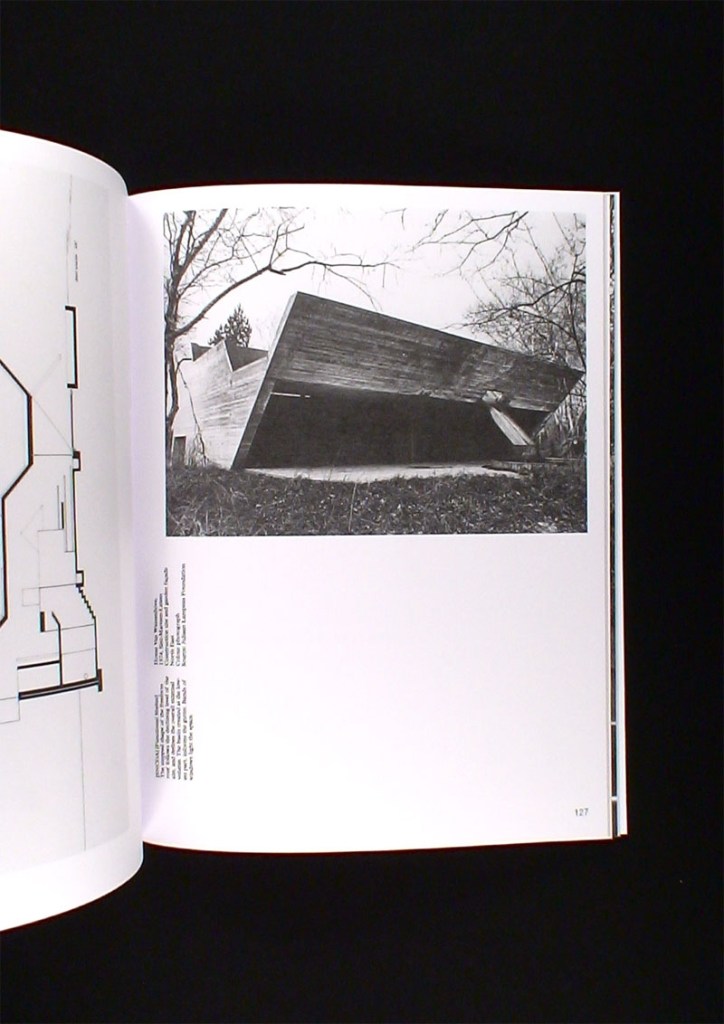
(…) Lampens works almost exclusively with concrete, wood and glass. Formally, his homes are designed to showcase an interior and exterior harmony with their environment and nature. Borders, cardinal orientation and lines of sight are all central to the placement and construction of the home. Typically, Lampens’ homes are closed to the public on one side (concrete walls shield the house from the street), but are otherwise completely open to nature, so that there is always a formal exchange between transparency and closure. He constantly tries to reach an absolute reconciliation of the antagonism between Le Corbusier’s whimsy and Mies van der Rohe’s control. He also has a deep admiration for Oscar Niemeyer, the bunkers along the Atlantic wall and Romanesque architecture. He got to know the work of Oscar Niemeyer through the first magazine he ever bought: L’ Architecture d’Aujourd’hui from 1947. This volume was a very important stimulant for his thinking and an inspirational source for him. It had a focus on Brazilian architecture and Lampens was especially impressed by the plans, sections and photographs of Pampulha by Niemeyer. (…)
‘Freehand drawing and sketching is always an essential component. I also always draw details of the structure. And true to scale.‘
– Juliaan Lampens
***
Edited by Angelique Campens and with contributions by Angelique Campens, Sara Noel Costa De Araujo, Joseph Grima, Jan Kempenaers, Hans Ulrich Obrist, Francis Strauven
Designed by: Thomas Desmet
ISBN: 9789461178857
Campens, Angelique, ed. Juliaan Lampens. Brussels: ASA, 2010.
Download publication here:
Exhibition Juliaan Lampens
Witte Zaal Gent/ BE
From February 27 to April 4, 2009
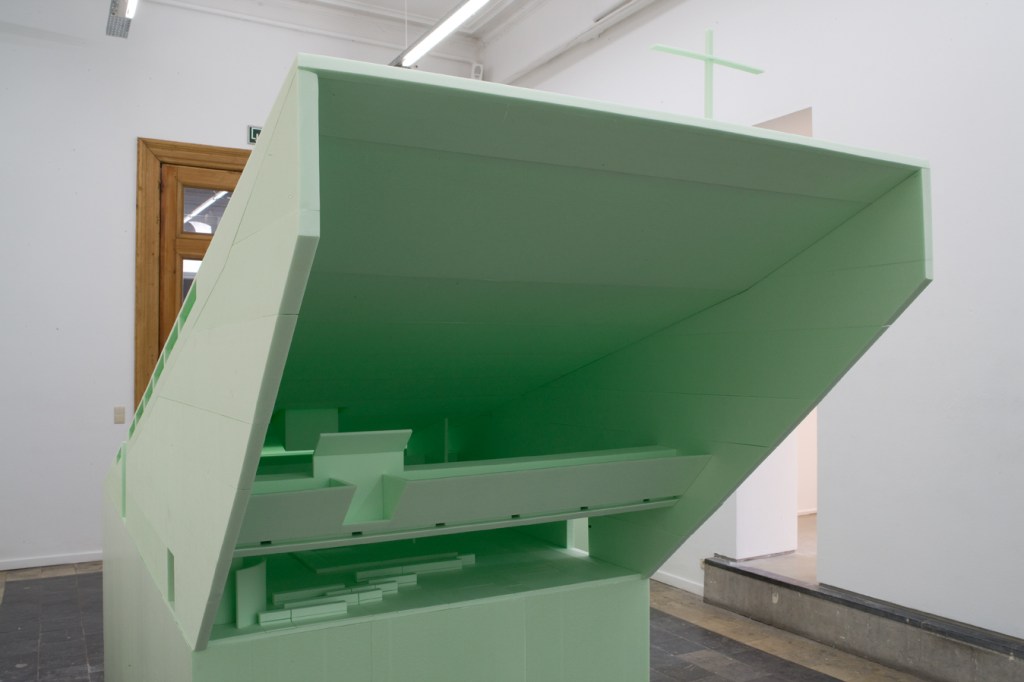
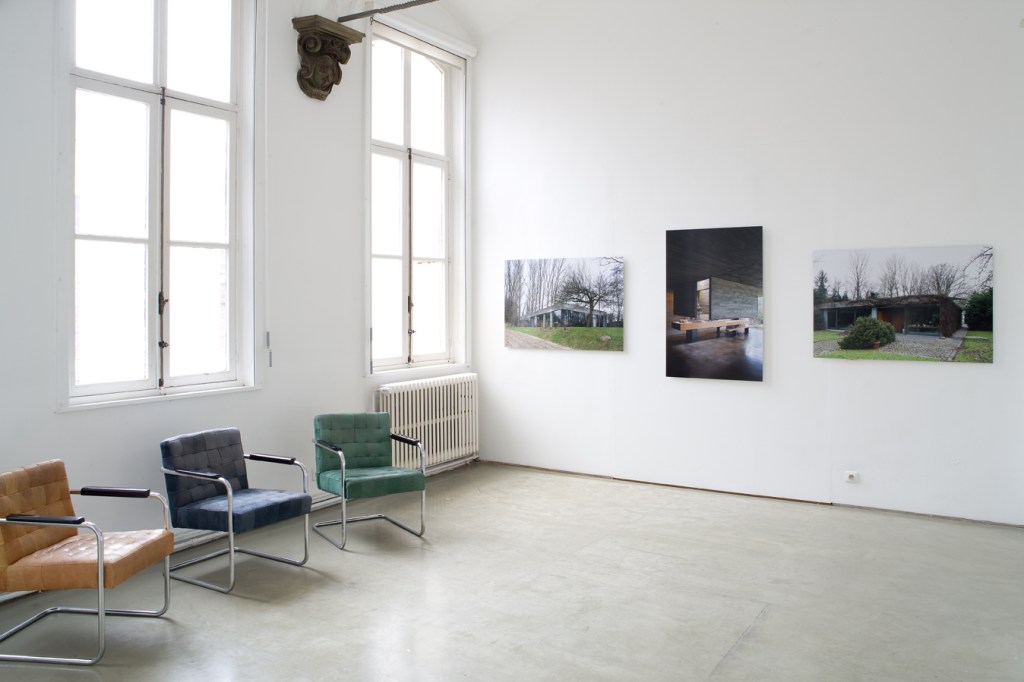
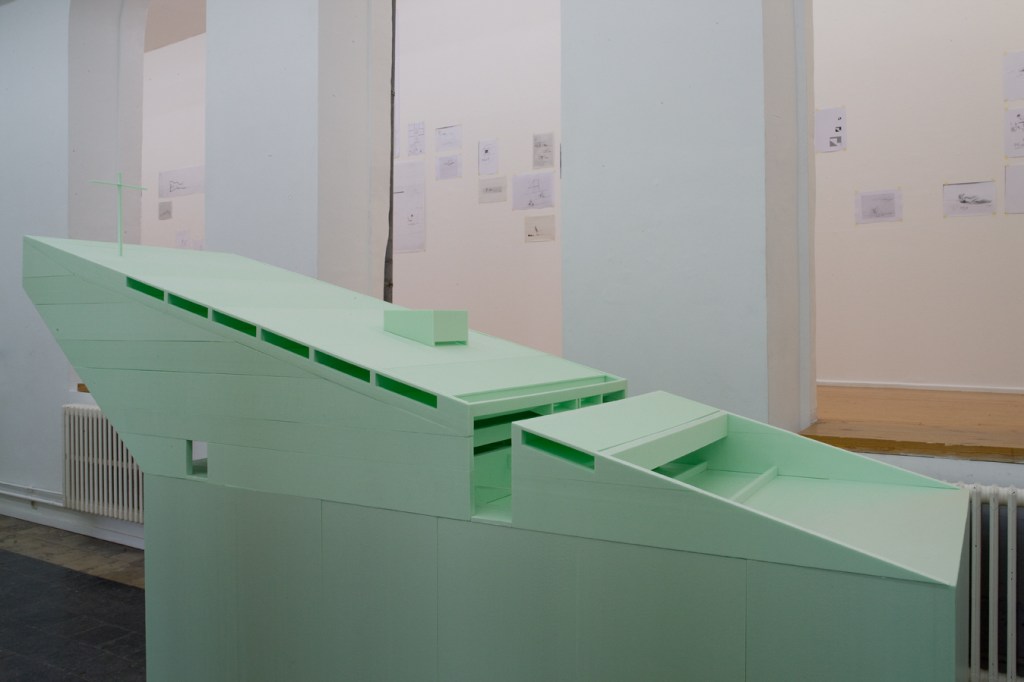
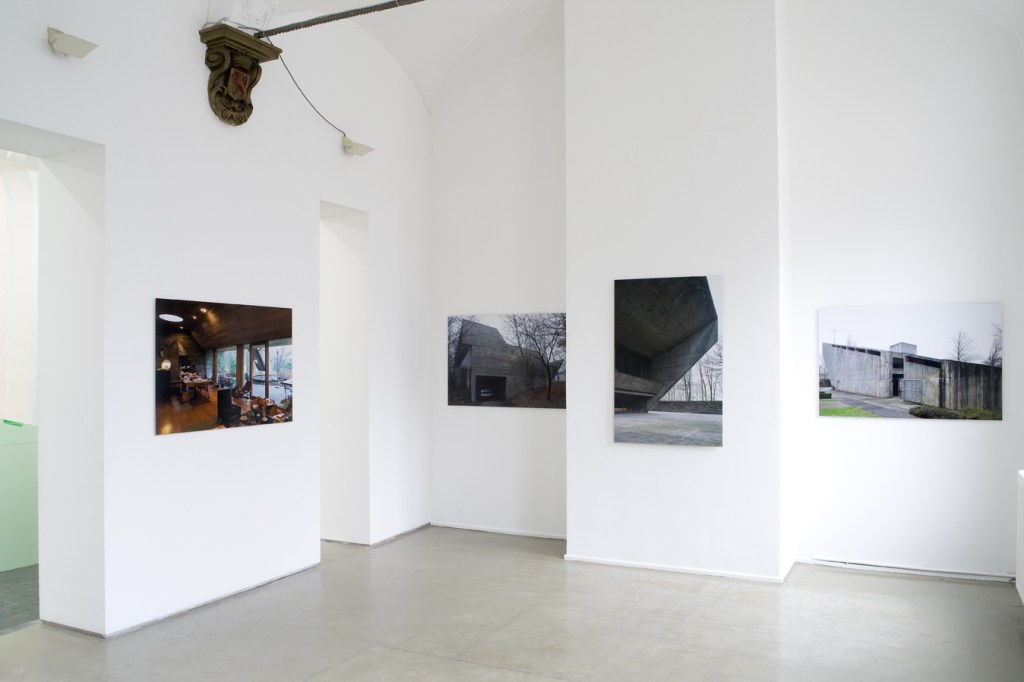
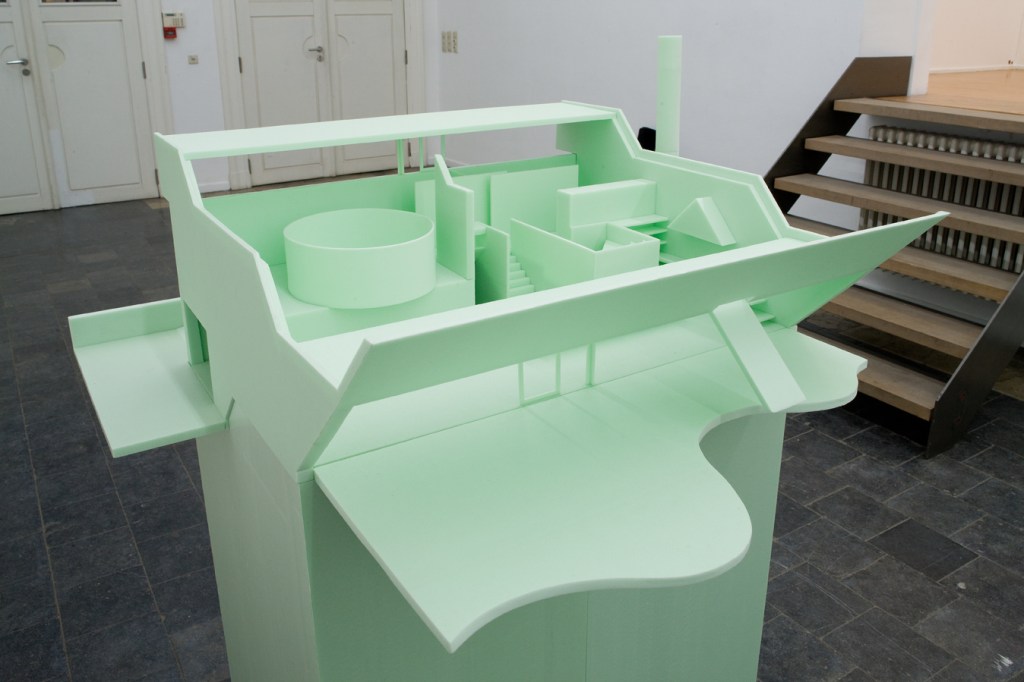
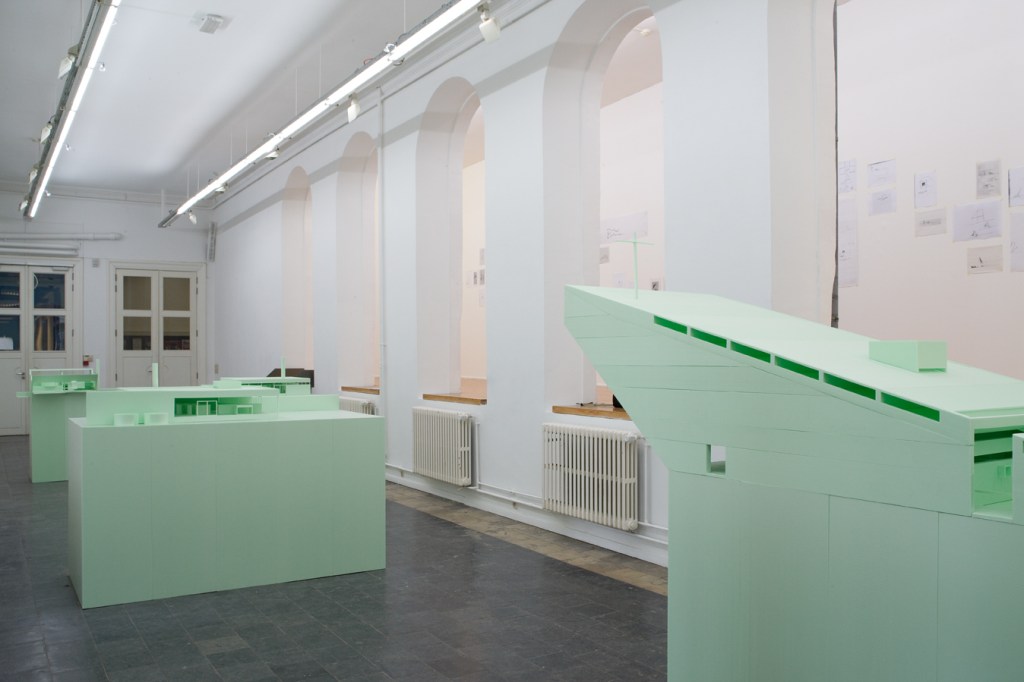
This exhibition was the first exhibition — i.e. since the 1991 retrospective Juliaan Lampens 1951-1990 in the Singel — to focus on some of Lampens’ most important works. The exhibition introduced an insight of the formal and cultural aspects of Lampens’ architecture through architectural drawings, floor plans, models and photographs made by Jan Kempenaers. The exhibition architecture was designed by the architect Sara Noel Costa de Araujo and a serie of new photographs was made by photographer Jan Kempenaers. The photographs and exhibits present a personal interpretation of Lampens’ architecture. They emphasise the meaning and complexity of this amazing oeuvre. Point of departure for this exhibition were three private buildings — the architect’s own house in Eke (1960), the Vandenhaute-Kiebooms residence in Huise, and the Vanwassenhove residence in Sint-Martens-Latem (1974)—and the pilgrimage chapel of Our Lady of Kerselare in Edelare (1966). 1960-1975 is the period when Lampens’ ideas arrived at their most extreme enactment through such features as a complete open plan without pillars or even without walls and the placing of every room seemingly conjoined with each other (kitchen, living room, bedrooms and bathroom all in one open space).
Curated by Angelique Campens


Other publications
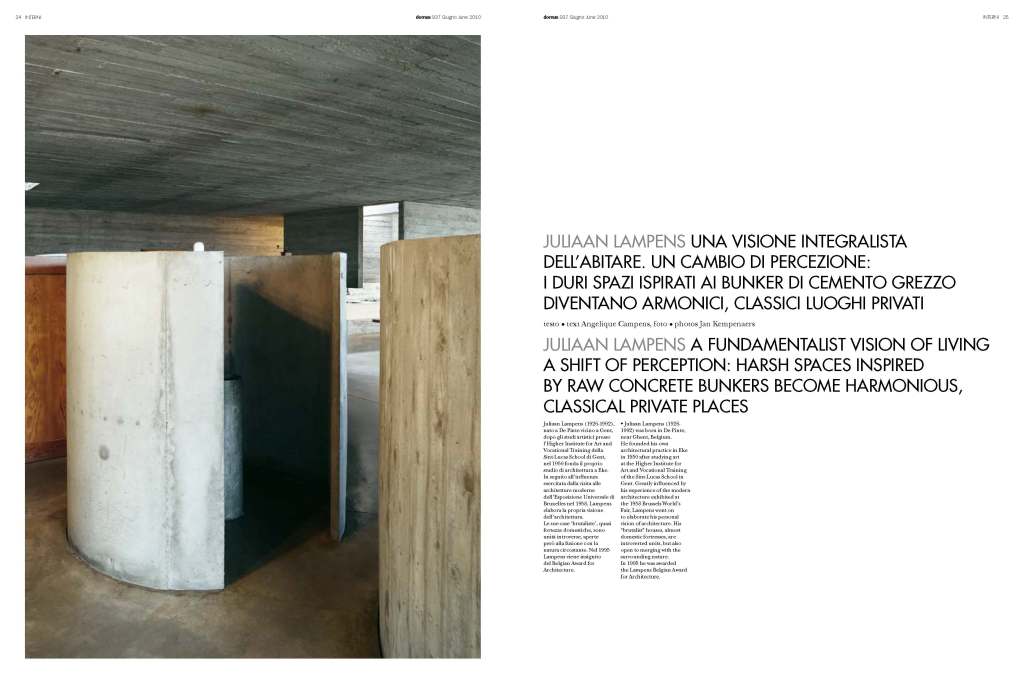
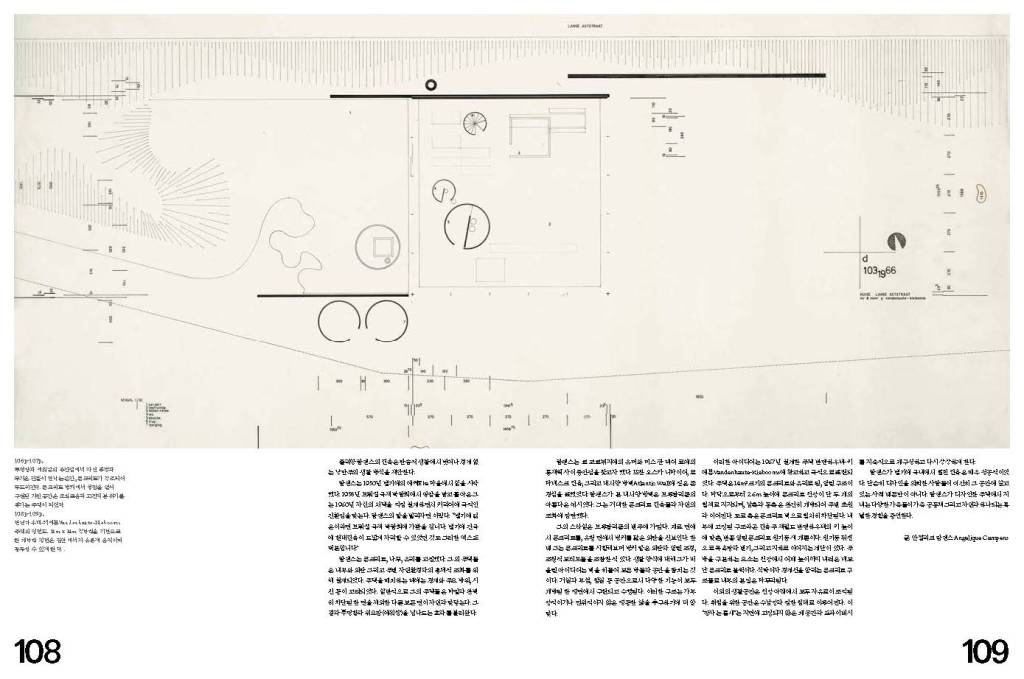
Angelique Campens, “Project : A Fundamentalist Vision of Living : Juliaan Lampens” = 삶을 향한 근본주의 줄리앙 람펜스 2019: 106-109

Dimension of Concrete Interiors During the 1960s.” PALGRAVE
COMMUNICATIONS 3 (2017): n. pag.
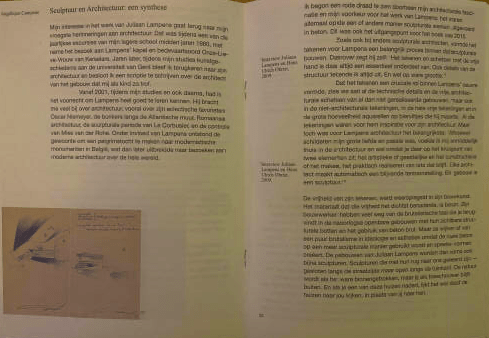
Angelique Campens “Sculptuur en Architectuur : Een Synthese.” In Eerbetoon Juliaan Lampens 1926-2019, edited by Dieter Lampens, 21–26. VZW Juliaan Lampens ; Flemish Architecture Institute (VAI).
Angelique Campens, “Juliaan Lampens” in MDd, 4 2007 (p 84-85)
Thesis
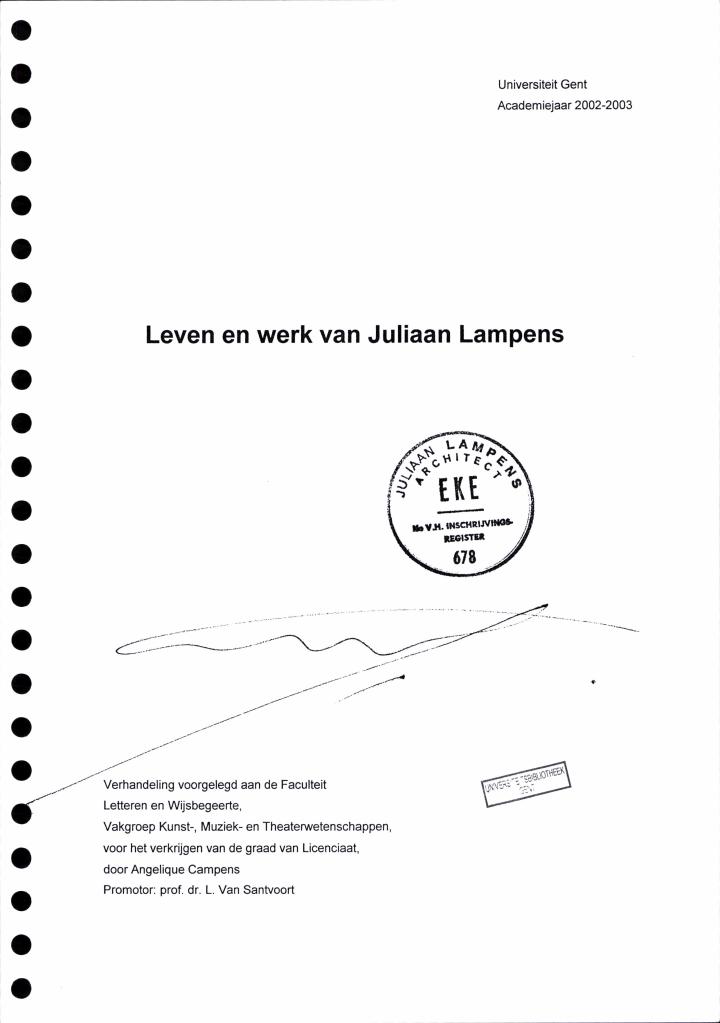
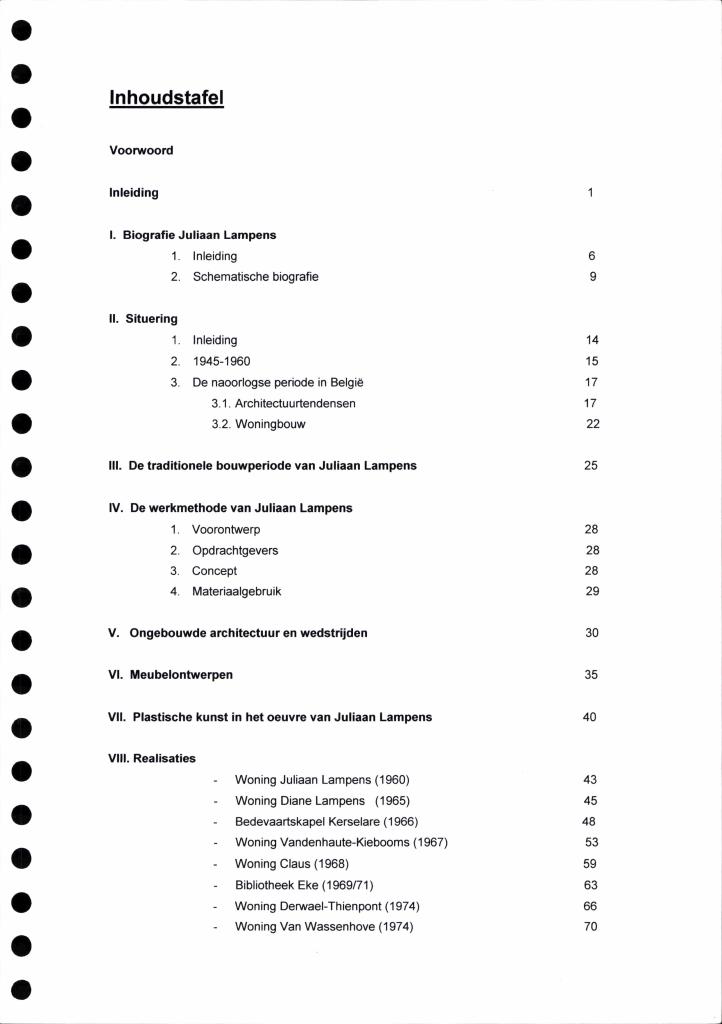
Angelique Campens, Leven en werk van Juliaan Lampens (Life and works of Juliaan Lampens), Master thesis Ugent, 2002-2003
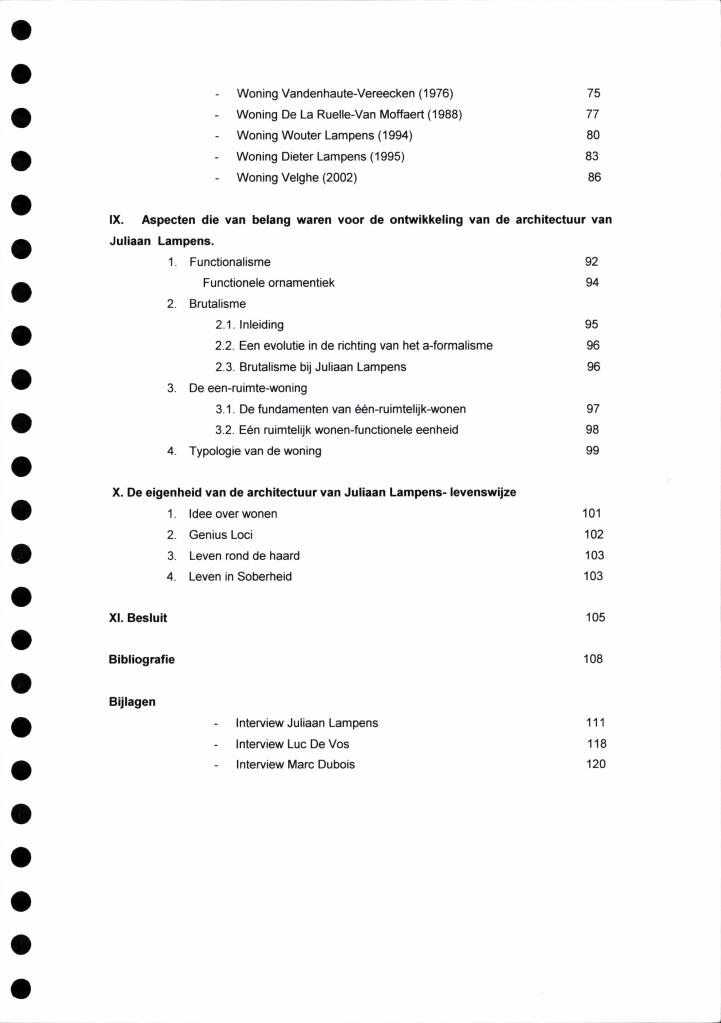

Excerpt from Interview with Juliaan Lampens, conducted from August 2002 to March 2003

This is part of an unpublished interview conducted over several days; it is a transcription of the recorded conversations.

(…)
A.C: Wasn’t that also an audience that was very modern in spirit?

J.L: “It was not an ordinary public, but a public with talent I mean a public that was open to this. Because that way of living has a great impact on life itself.”
A.C: What do you mean by this?
J.L: “The family within the society has to get used to this. You can’t cover up your own shortcomings. Everything happens in 1-room. It’s basically a one-room house.”
A.C: What do you do with privacy?
J.L: “Everything has to do with respect.
If someone is studying, you shouldn’t turn the music up too loud. But this is also in other houses where there are walls.
Of course, it’s hard to push that concept in a small home. The bigger the home the easier.”
read more:
Extra
read more about House Van Wassenhove:
selection popular press:
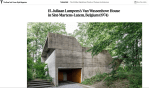
The Van Wassenhove house has been included in The New York Times’ 25 Most Significant Works of Postwar Architecture.
“Of the many Brutalist buildings, I would like to highlight this one. It is by a Belgian architect who was unknown until his book was published in 2010. He created buildings that refer to bunkers, and they are quite sculptural: the furniture is part of the architecture. He was a great Belgian Brutalist — a modernist, of course — but he also references Mies van der Rohe and Le Corbusier.” -Vincent Van Duysen on his nomination of House Van Wassenhove.
“25 Most Significant Works of Postwar Architecture,” The New York Times, 2 Augustus 2021.

https://www.wallpaper.com/architecture/juliaan-lampens-homage-concrete-architecture-belgium
