News and Highlights
-
Book Release – Beyond Brutalism
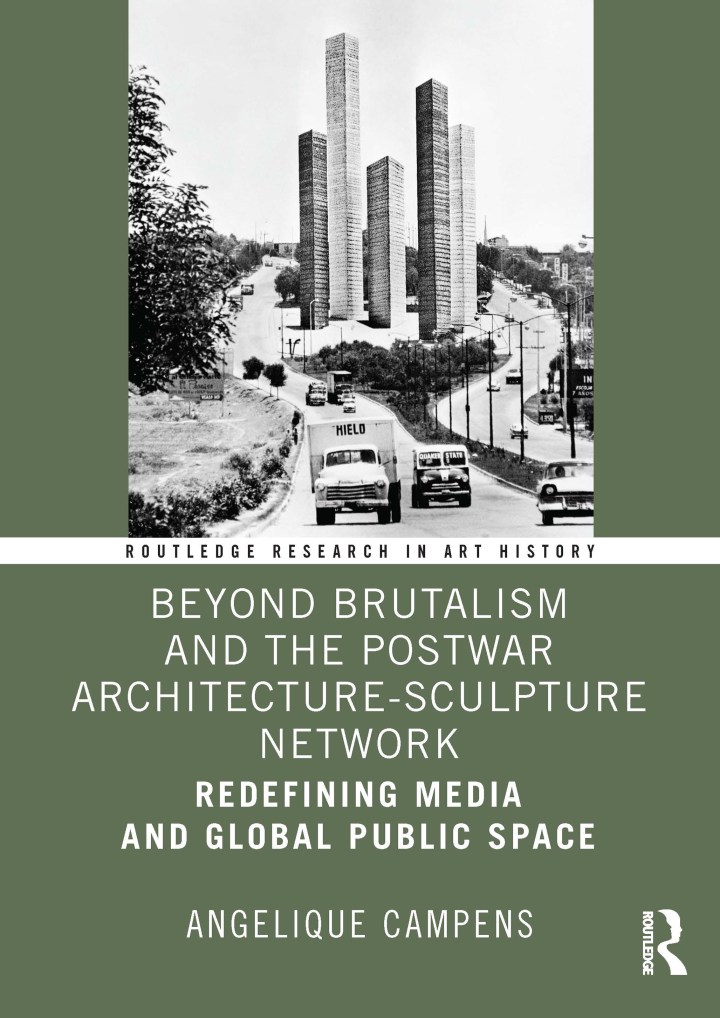
Beyond Brutalism and the Postwar Architecture–Sculpture Network
Published December 8, 2025 by RoutledgeISBN: 978-1-0411-0332-5
210 pages · 69 B/W illustrationsThis study focusses on the moment in the history of modern art, during the 1950s when sculptors and architects began to use concrete to create a previous impossible fusion of their respective art forms and the mutual influences between sculpture and architecture.
The book pays particular attention to those works that left the concrete “brut”—that is, “raw” or unfinished—and thus produced a rough aesthetic that has become an icon of postwar art. The author shines a spotlight on the work of André Bloc and the international networks, publications, and initiatives that he facilitated, demonstrating the pivotal role he played on the exchange between architecture and sculpture and the expansion of public art practice. Placing Bloc among a roster of artists and architects working in concrete that also included Picasso and Le Corbusier, the book follows the movement from brut’s conceptual and material roots in the 1930s into the height of its influence from the mid-50s to early-70s. It ends by tracing the legacy into the present. In so doing, it shows how fundamental the use of concrete was to the development of a new architectural-sculptural form, and, in turn, how their interdisciplinary and socially focused practices form an overlooked genealogy of the arts in the present.
A preview of this publication is available via Amazon Kindle.
Selected pages are also available via Google Books.
-
Publication and work done on Juliaan Lampens
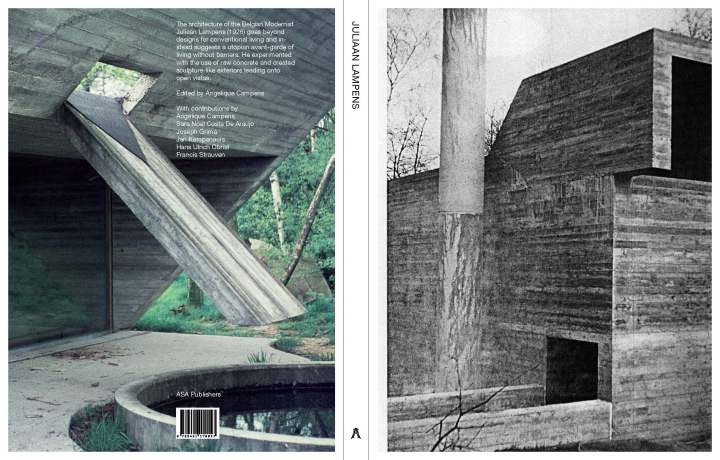
The architecture of the Belgian Modernist Juliaan Lampens (1926) goes beyond designs for conventional living and instead suggests a utopian avant-garde of living without barriers. He experimented with the use of raw concrete and created sculpture-like exteriors leading onto open vistas.
book / exhibition / other publications / thesis
***
INTRODUCTION Angelique Campens
‘Each architect automatically creates a permanent exhibition. Each building is a sculpture.’
— Juliaan Lampens
The architecture of Juliaan Lampens (b. 1926) moves past conventional living towards the utopian avant-garde vision of living without barriers. In 1950, Lampens started his own business in Belgium (in Eke, a village in the neighbourhood of Ghent) as a more or less conventional architect. After going to the 1958 World’s Fair in Brussels, he radically changed course and decided to build a home for himself in 1960. This construction proved to be a turning point in his career. Indeed, Lampens was profoundly influenced by the fair. As he once stated: ‘Every healthy Belgian visited the world’s fair. It was due in part to the world expo of modern architectural styles that such work became accepted and established in Belgium. The masses saw the possibilities of technology and started to believe in modern architecture, and I felt that the climate was ready to build in a modern way in Belgium.’ In general, there was a celebration of forms, materials and technology, but no uniform style that characterised the fair.
(….)
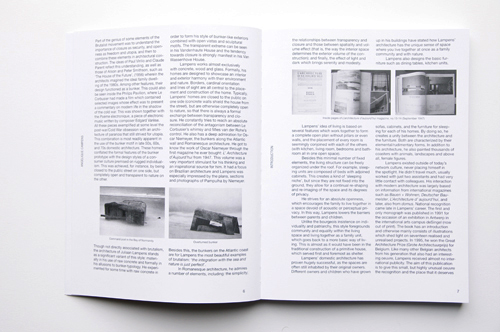
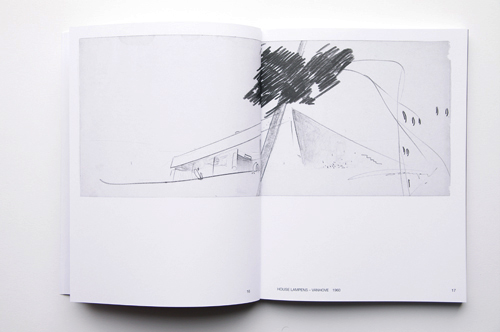
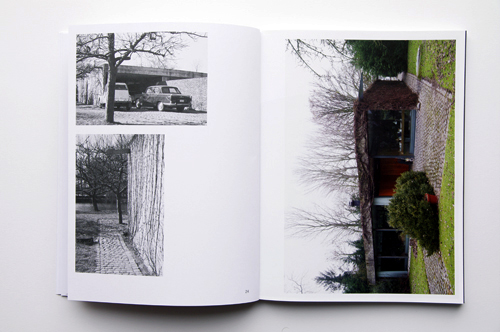
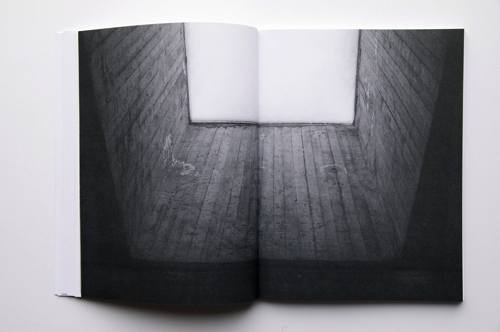
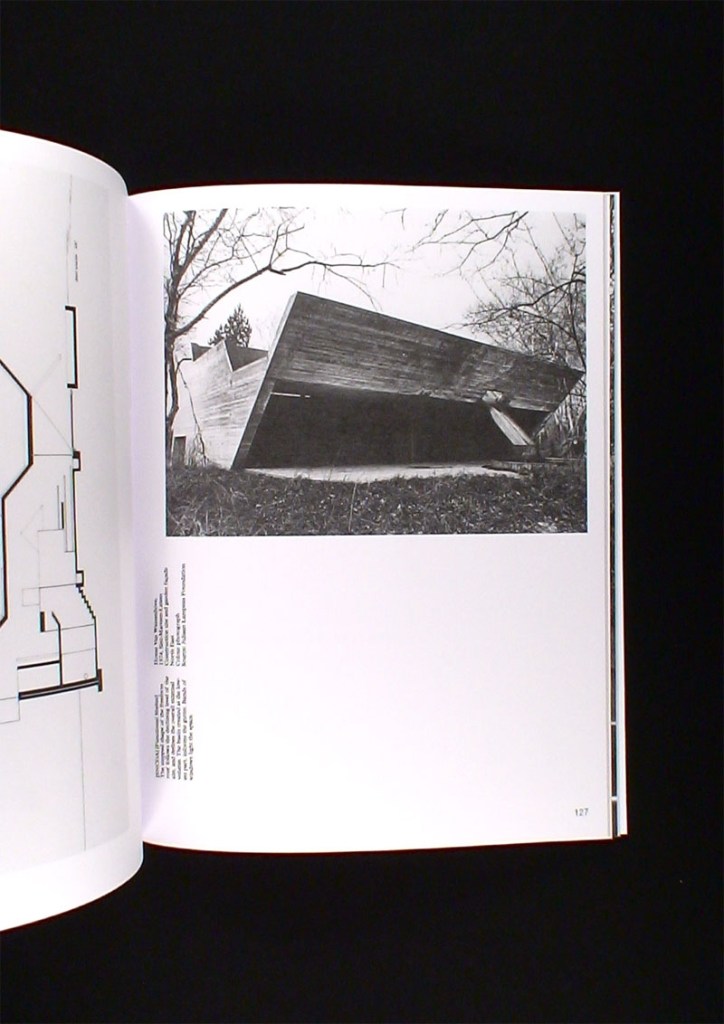
(…) Lampens works almost exclusively with concrete, wood and glass. Formally, his homes are designed to showcase an interior and exterior harmony with their environment and nature. Borders, cardinal orientation and lines of sight are all central to the placement and construction of the home. Typically, Lampens’ homes are closed to the public on one side (concrete walls shield the house from the street), but are otherwise completely open to nature, so that there is always a formal exchange between transparency and closure. He constantly tries to reach an absolute reconciliation of the antagonism between Le Corbusier’s whimsy and Mies van der Rohe’s control. He also has a deep admiration for Oscar Niemeyer, the bunkers along the Atlantic wall and Romanesque architecture. He got to know the work of Oscar Niemeyer through the first magazine he ever bought: L’ Architecture d’Aujourd’hui from 1947. This volume was a very important stimulant for his thinking and an inspirational source for him. It had a focus on Brazilian architecture and Lampens was especially impressed by the plans, sections and photographs of Pampulha by Niemeyer. (…)
‘Freehand drawing and sketching is always an essential component. I also always draw details of the structure. And true to scale.‘
– Juliaan Lampens***
Edited by Angelique Campens and with contributions by Angelique Campens, Sara Noel Costa De Araujo, Joseph Grima, Jan Kempenaers, Hans Ulrich Obrist, Francis Strauven
Designed by: Thomas Desmet
ISBN: 9789461178857
Campens, Angelique, ed. Juliaan Lampens. Brussels: ASA, 2010.
Download publication here:
Exhibition Juliaan Lampens
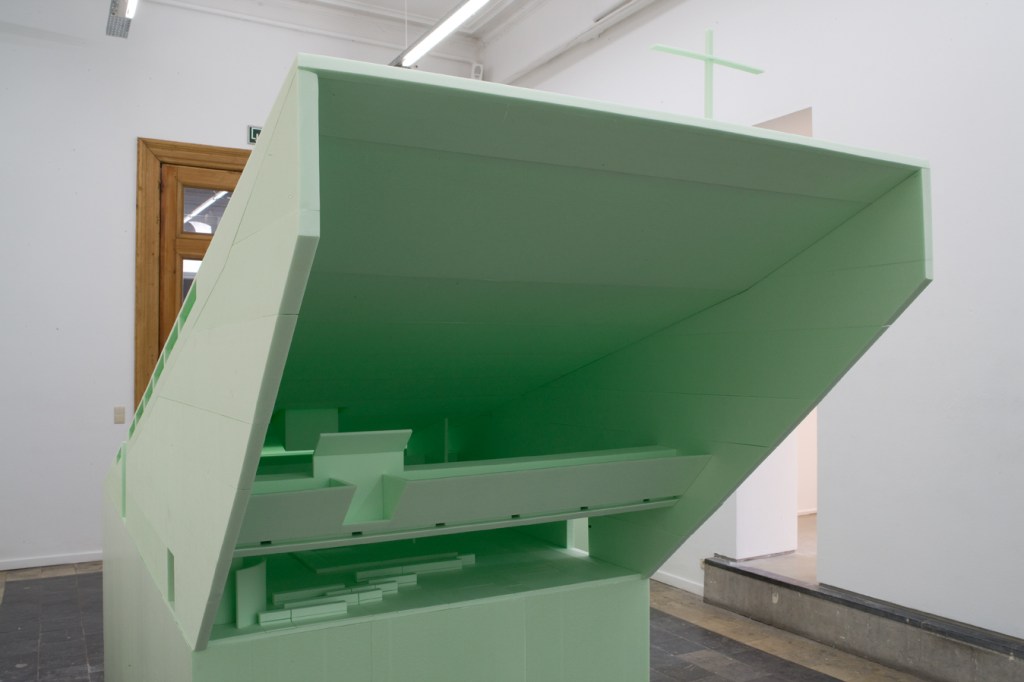
Witte Zaal Gent/ BE
From February 27 to April 4, 2009
This exhibition was the first exhibition — i.e. since the 1991 retrospective Juliaan Lampens 1951-1990 in the Singel — to focus on some of Lampens’ most important works. The exhibition introduced an insight of the formal and cultural aspects of Lampens’ architecture through architectural drawings, floor plans, models and photographs made by Jan Kempenaers. The exhibition architecture was designed by the architect Sara Noel Costa de Araujo and a serie of new photographs was made by photographer Jan Kempenaers. The photographs and exhibits present a personal interpretation of Lampens’ architecture. They emphasise the meaning and complexity of this amazing oeuvre. Point of departure for this exhibition were three private buildings — the architect’s own house in Eke (1960), the Vandenhaute-Kiebooms residence in Huise, and the Vanwassenhove residence in Sint-Martens-Latem (1974)—and the pilgrimage chapel of Our Lady of Kerselare in Edelare (1966). 1960-1975 is the period when Lampens’ ideas arrived at their most extreme enactment through such features as a complete open plan without pillars or even without walls and the placing of every room seemingly conjoined with each other (kitchen, living room, bedrooms and bathroom all in one open space).
Curated by Angelique Campens
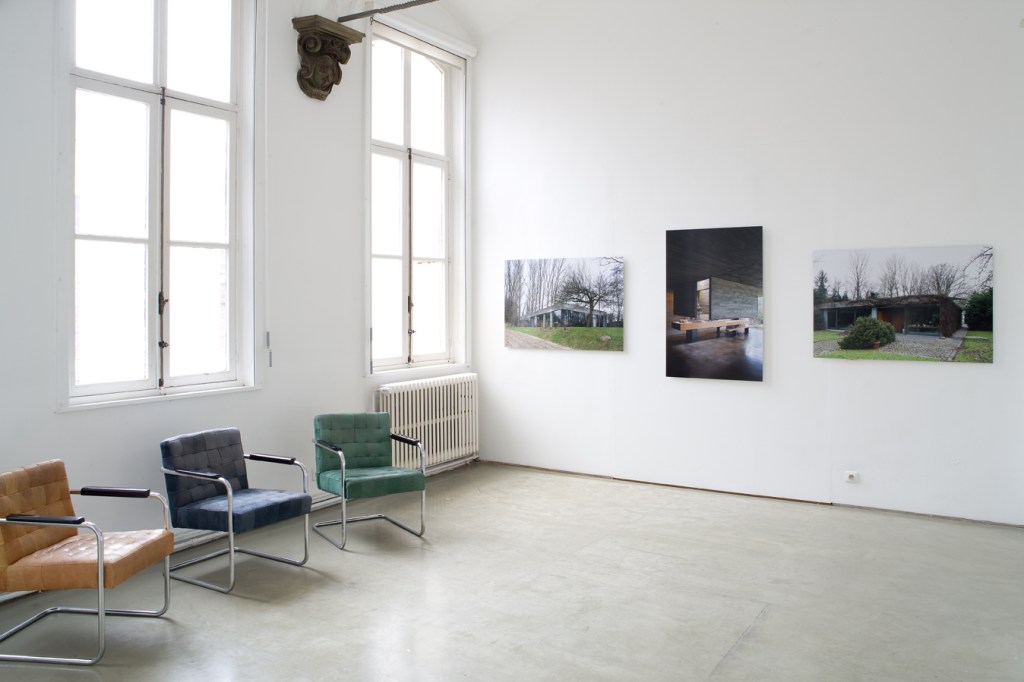
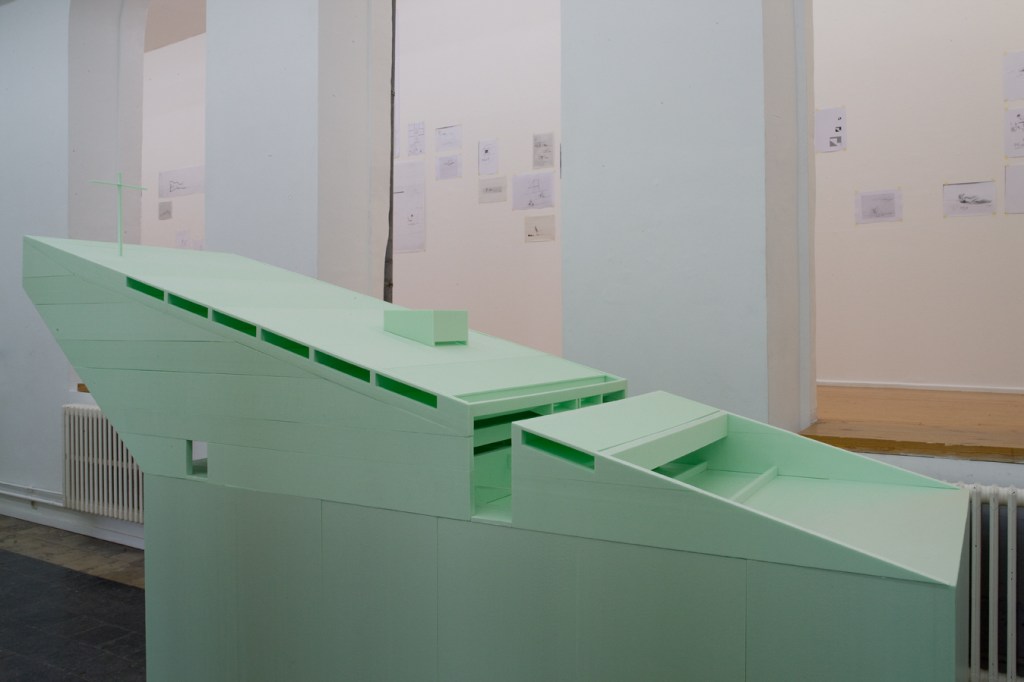

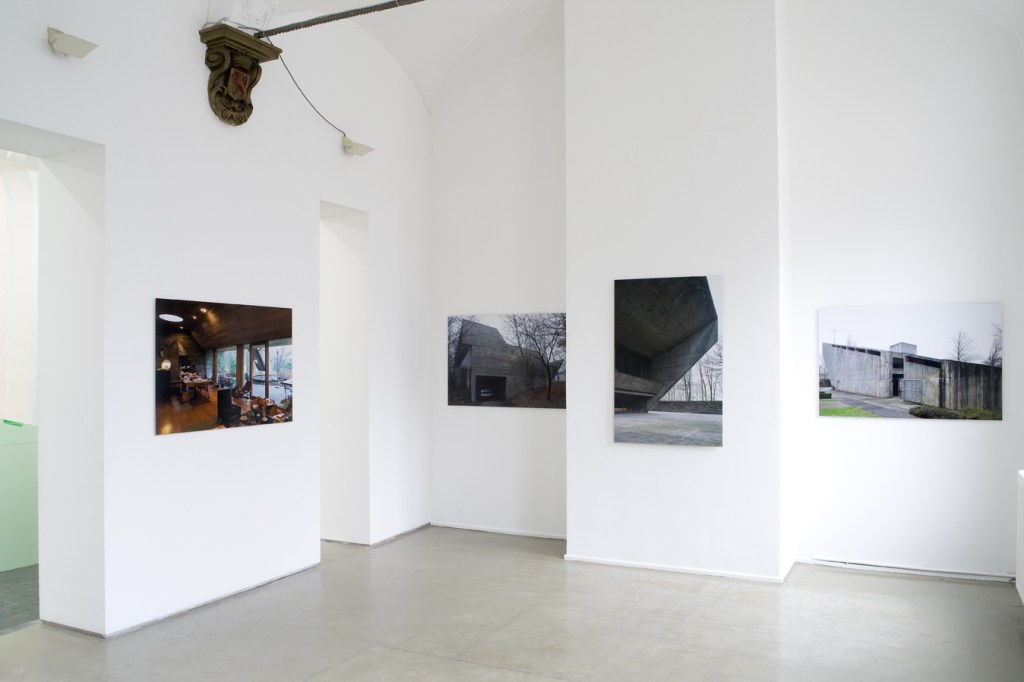

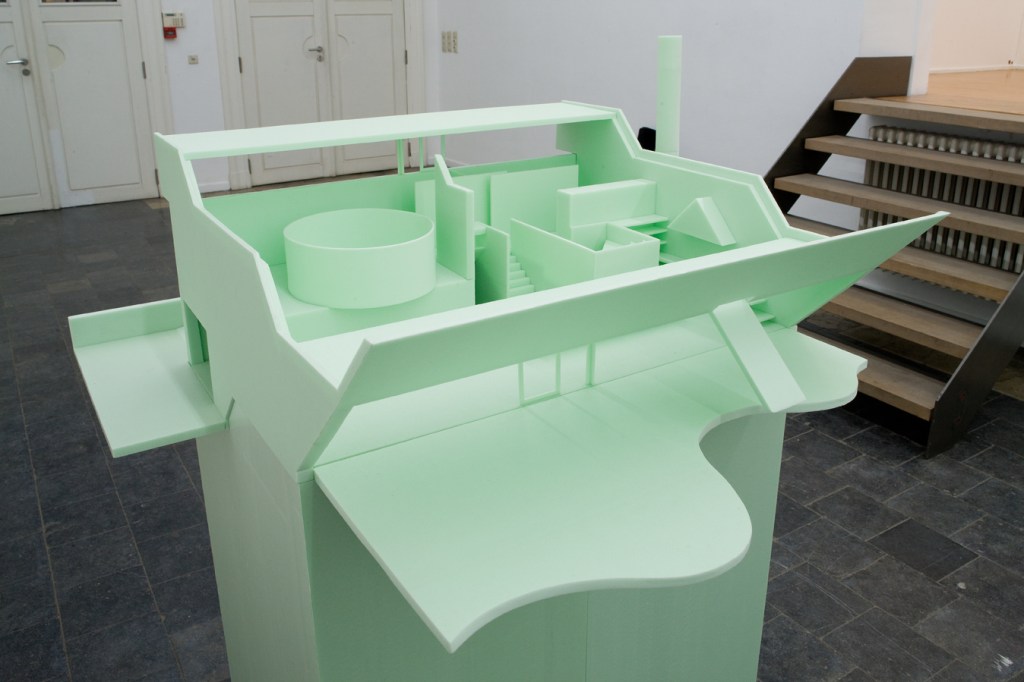
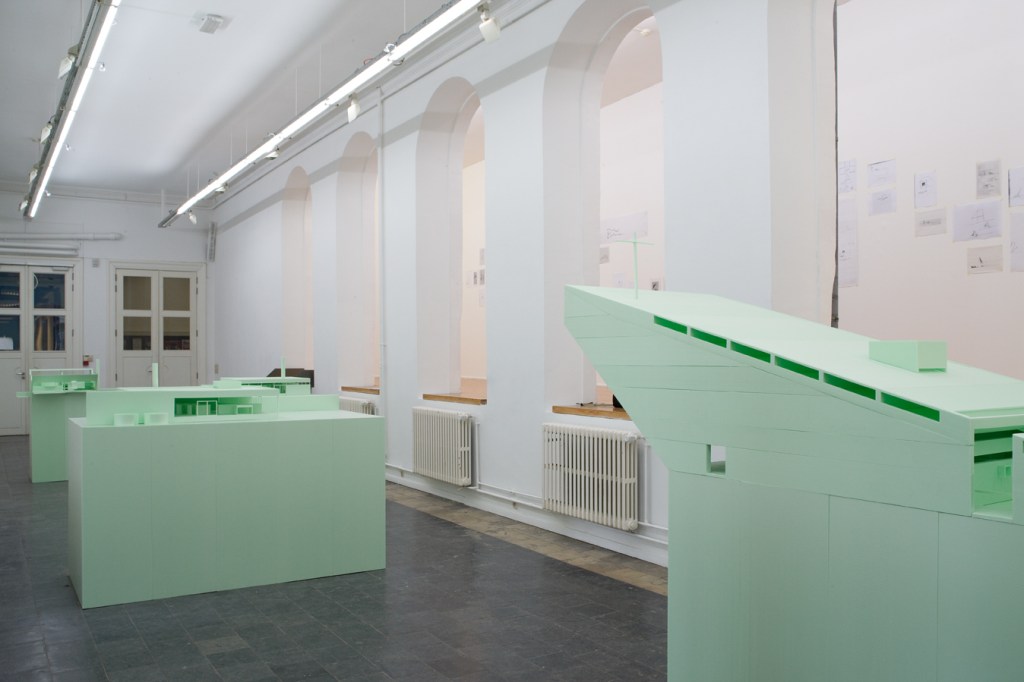
Installation views: (c) Jan Kempenaers
Other publications
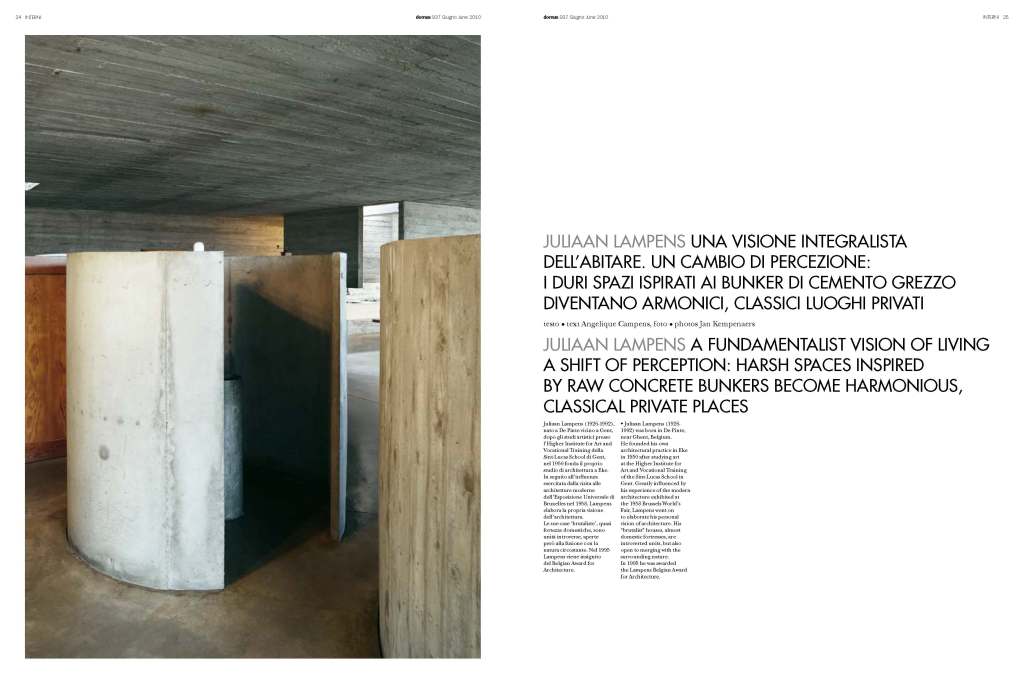
Angelique Campens,Juliaan Lampens a Fundamentalist Vision of Living.” Domus, 937 (June, 2010): 24 -30. 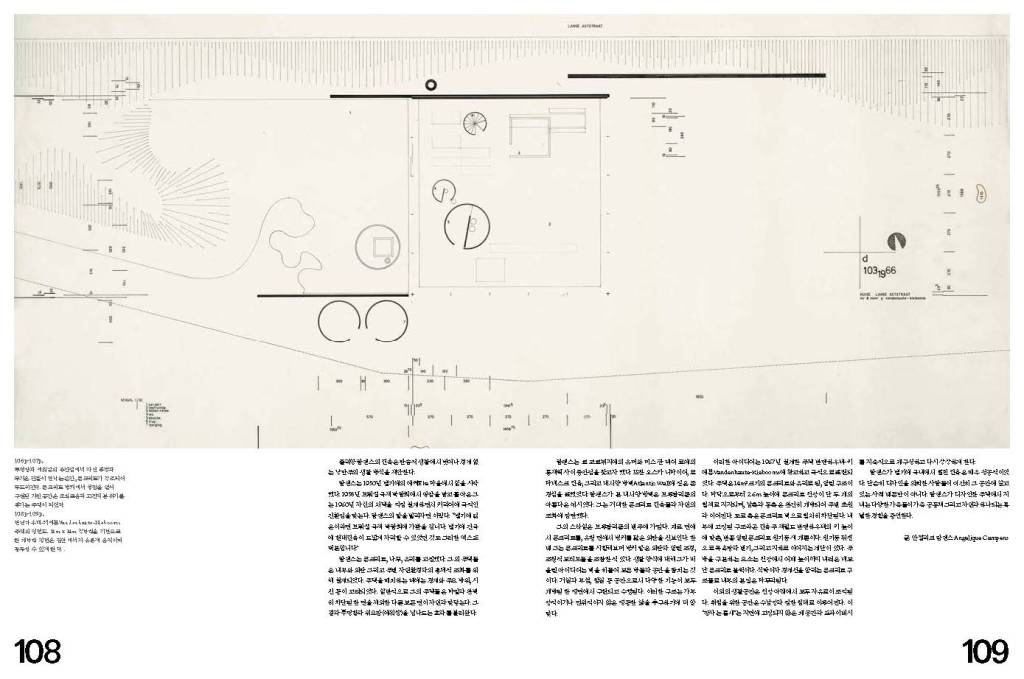
Angelique Campens, “Project : A Fundamentalist Vision of Living : Juliaan Lampens” = 삶을 향한 근본주의 줄리앙 람펜스 2019: 106-109
Angelique Campens, “The Sociological
Dimension of Concrete Interiors During the 1960s.” PALGRAVE
COMMUNICATIONS 3 (2017): n. pag.
Angelique Campens “Sculptuur en Architectuur : Een Synthese.” In Eerbetoon Juliaan Lampens 1926-2019, edited by Dieter Lampens, 21–26. VZW Juliaan Lampens ; Flemish Architecture Institute (VAI).
Angelique Campens, “Juliaan Lampens” in MDd, 4 2007 (p 84-85)
Thesis
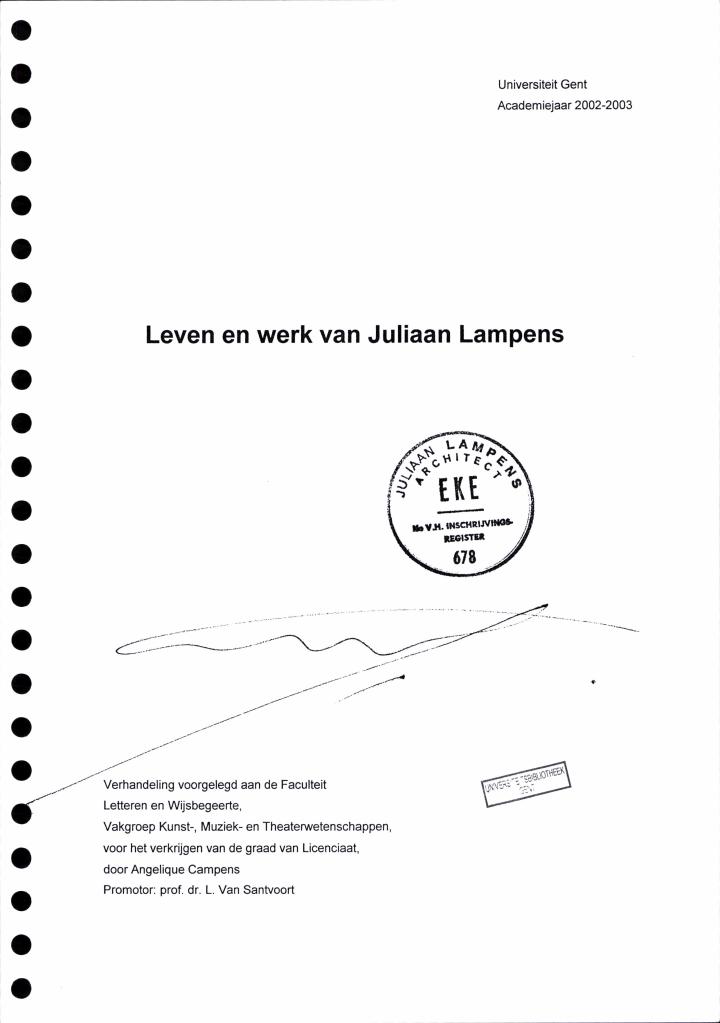
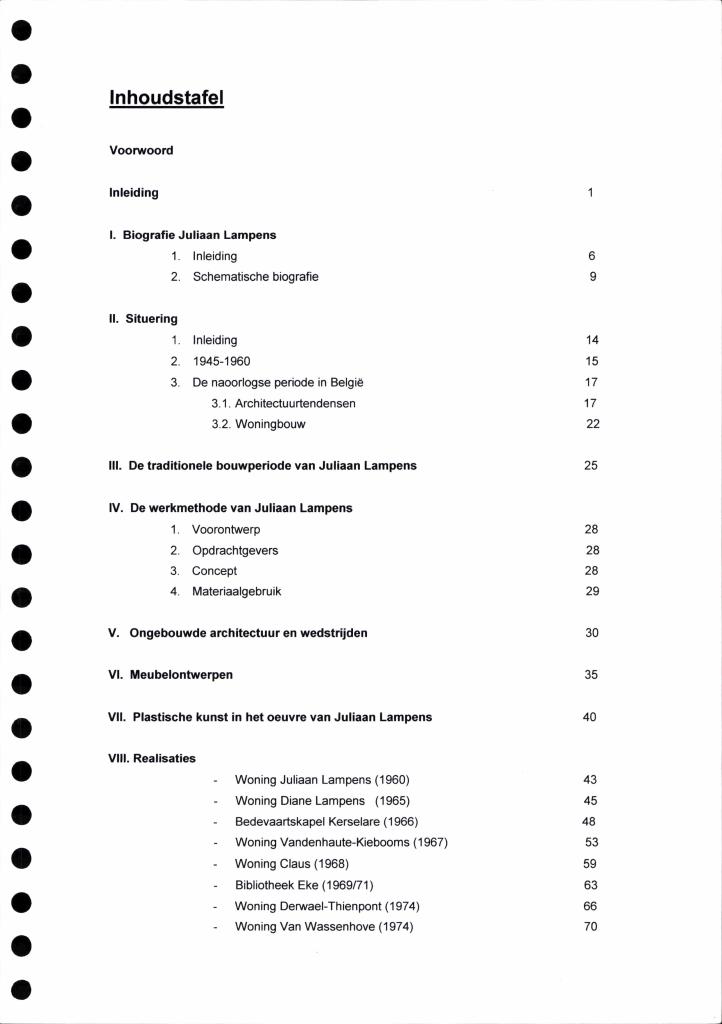
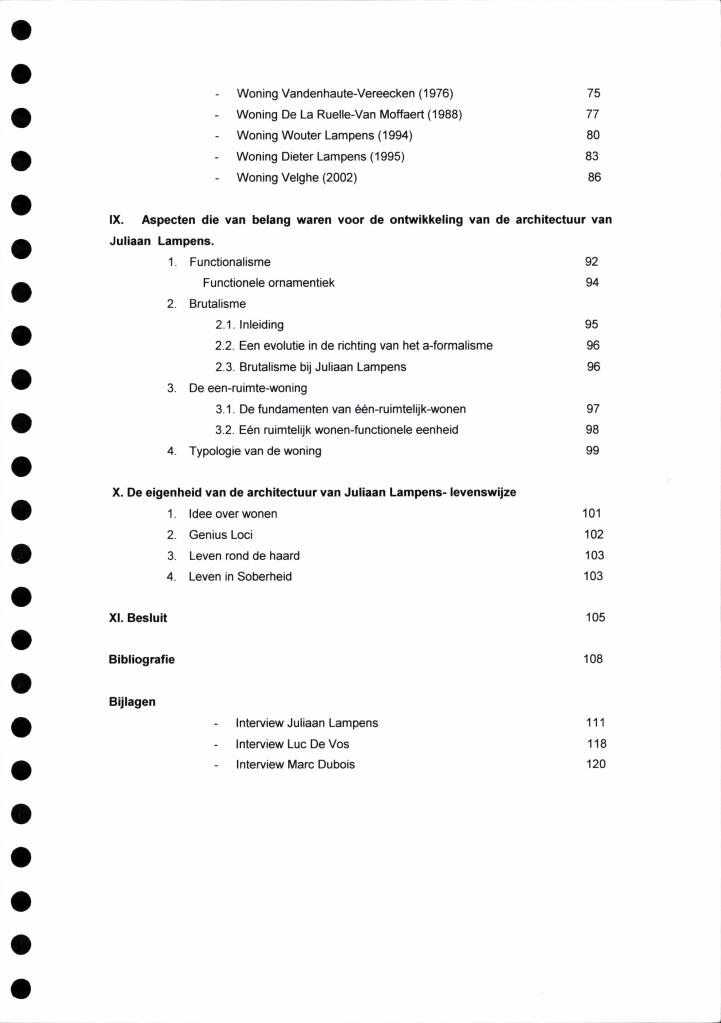
Angelique Campens, Leven en werk van Juliaan Lampens (Life and works of Juliaan Lampens), Master thesis Ugent, 2002-2003

Interior view of the Van Wassenhove house with the owner Albert Van Wassenhove in the background, 2002 Photograph Angelique Campens Excerpt from Interview with Juliaan Lampens, conducted from August 2002 to March 2003 This is part of an unpublished interview conducted over several days; it is a transcription of the recorded conversations. (…)
A.C: Wasn’t that also an audience that was very modern in spirit?

Juliaan Lampens in conversation with the client Albert Van Wassenhove, 2002 Photograph Angelique Campens J.L: “It was not an ordinary public, but a public with talent I mean a public that was open to this. Because that way of living has a great impact on life itself.”
A.C: What do you mean by this?
J.L: “The family within the society has to get used to this. You can’t cover up your own shortcomings. Everything happens in 1-room. It’s basically a one-room house.”
A.C: What do you do with privacy?
J.L: “Everything has to do with respect.
If someone is studying, you shouldn’t turn the music up too loud. But this is also in other houses where there are walls.
Of course, it’s hard to push that concept in a small home. The bigger the home the easier.”
read more:
Extra
read more about House Van Wassenhove:
selection popular press:
The Van Wassenhove house has been included in The New York Times’ 25 Most Significant Works of Postwar Architecture.
“Of the many Brutalist buildings, I would like to highlight this one. It is by a Belgian architect who was unknown until his book was published in 2010. He created buildings that refer to bunkers, and they are quite sculptural: the furniture is part of the architecture. He was a great Belgian Brutalist — a modernist, of course — but he also references Mies van der Rohe and Le Corbusier.” -Vincent Van Duysen on his nomination of House Van Wassenhove.
“25 Most Significant Works of Postwar Architecture,” The New York Times, 2 Augustus 2021.

https://www.wallpaper.com/architecture/juliaan-lampens-homage-concrete-architecture-belgium
-
Introduction:
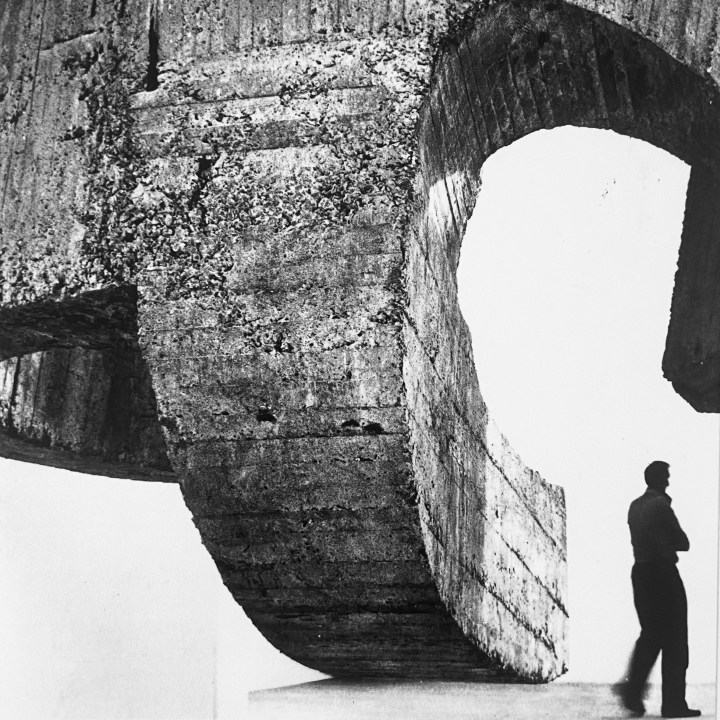
In particular, we distinguish the plasticity of reinforced concrete, and especially the massive sculptures for which eminent artists have, with happiness, abandoned natural stone.1
– Bernard Zehrfuss and Pierre Faucheux
Photograph: Erica Cooke About me: Angelique Campens is an art and architecture historian, curator, and writer specializing in the intersections of sculpture and architecture, monumental public sculpture, and sculptural concrete (béton brut). Her forthcoming book, Beyond Brutalism and The Postwar Architecture–Sculpture Network, will be published by Routledge in late 2025
She has curated exhibitions at leading international institutions, including The Kitchen and the Whitney Museum in New York, Kulturprojekte Berlin, Fondazione Sandretto Re Rebaudengo, BOZAR, and WIELS. In 2007–2008, she was a Curatorial Fellow at the Whitney’s Independent Study Program (ISP).
In addition to curatorial work, she has contributed to catalogues and journals such as Taschen’s Art Now Vol. 4, Abitare, Domus, Sculpture Journal, and Aspect. She previously published a monograph on architect Juliaan Lampens (2010) and a recent monograph on artist-architect Jacques Moeschal, accompanied by a curated exhibition at BOZAR.
In 2022, she earned a PhD from Ghent University on André Bloc’s pivotal role in the postwar architecture–sculpture debate. She teaches at KASK / School of Arts Ghent and serves as Review Editor for Public Art Dialogue (Taylor & Francis). She also initiated and leads a think tank on experiencing art in public space, from which a podcast emerged. The project fosters dialogue on art’s role in urban environments, bringing together artists, architects, theorists, and students through site-specific discussions and educational programs.
Focused expertise:
Publication and work done on Juliaan Lampens: read more
Work on Jacques Moeschal: read more
Phd Béton Brut: André Bloc and the architecture-sculpture debate: read more
Contact: angeliquecampens@gmail.com
1 Bernard Zehrfuss and Pierre Faucheux, “L’Exposition: cent ans de béton armé,” L’Architecture d’Aujourd’hui, no. 27 (December 1949): VIII. Translated by the author.
-
Think Tank On Experiencing Art In Public Space
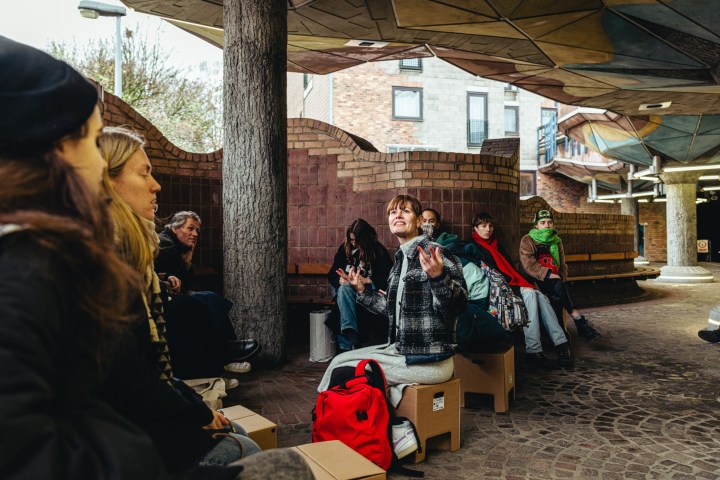
The think tank project (or: curriculum) focuses on the connection between art, architecture and society and wants to explore those relationships together with students. More specifically, it wants to examine the relevance of art in the public space, what it can do for society, and its educational value.
The project is primarily based on experiencing art and architecture (and its interactions) in the public space in real life (in situ), rather than through an image. With the underlying idea that by experiencing art and architecture, exchanges take place that are only possible in situ. This approach is in line with what architecture critic Juhani Pallasmaa argues in his introduction “The Eyes of the Skin.” According to him, multiple senses are needed to experience architecture and sculpture which cannot be achieved by viewing an image.
For this reason, we will move outside with the students and organise classes close to specific key works in public spaces. Here we will also brainstorm about art in public space and whether it is possible to measure “whether art in public space can contribute to educational well-being.” The above concepts will be addressed together with students as well as teachers, sociologists, residents, architects and artists.
photograph: (c) Michiel Devijver
🎧 Listen: Think Tank Podcast – Exploring Art in Public Space
***
devitrine #6
The architecture-sculpture network/
André Bloc and his journals
“(…) a few sculptors proposed collaborating directly in designing living architecture. Some architects even behave like real sculptors and their work includes original inspiration worthy of our epoch.” -Espaces Sculptés – Espaces Architecturés, Aujourd’hui Art et Architecture, no. 53 (May–June 1966), III
The writer, architect and artist André Bloc (1896–1966) was also the editor, and founder, of several important journals: L’Architecture d’Aujourd’hui (1930–present), and its spin offs Art d’Aujourd’hui (1949–1954) and Aujourd’hui Art et Architecture (1955–1967). Through these magazines Bloc aimed at creating a network bringing together architects and sculptors.
Drawing from the holdings of the Faculty Library Engineering and Architecture at Ghent University, devitrine #6 shows some results of research in this endeavour. For the exhibition, we selected approximately 60 articles from L’Architecture d’Aujourd’hui and Aujourd’hui Art et Architecture from the library’s extensive journal collections. (…)
devitrine #6: Curated by Angelique Campens
from 24 November 2022 until 24 January 2023
opening: Wednesday 23rd, 2022, 6 PM invitation
-
Béton Brut: André Bloc and the architecture-sculpture debate
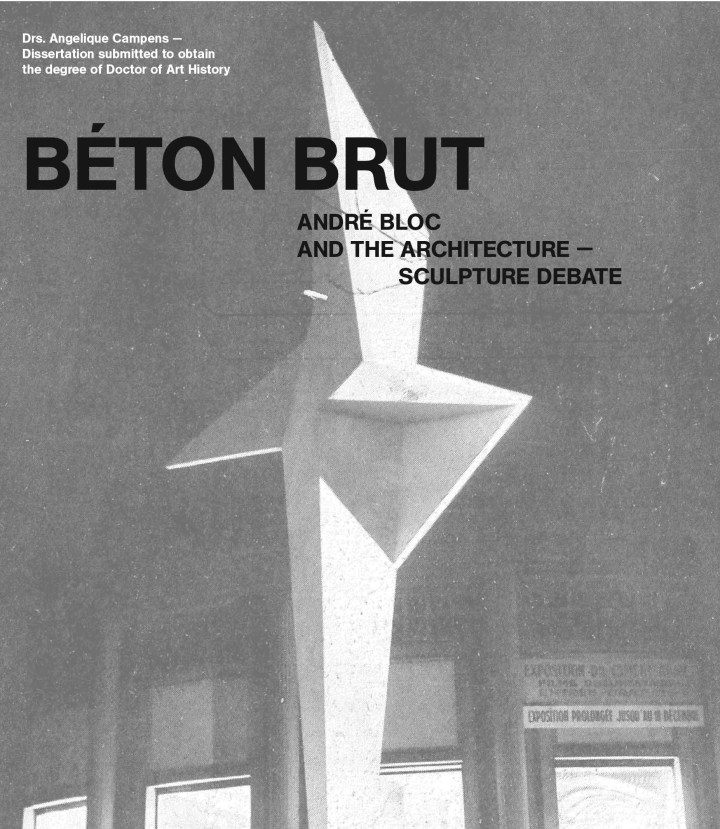
This dissertation deals with the legacy of André Bloc, who proved to be the central figure of a world-wide network of architects, artists, critics and theorists prominent within the architecture-sculpture debate. Abstract: In the 1950s, artists, sculptors and architects began to use the mass availability of concrete to create a previously impossible fusion of architecture and sculpture. This dissertation engages this understudied moment in the history of modern art, focusing on the mutual influences between sculpture and architecture as they engaged with concrete. It pays particular attention to those works that left the concrete “brut”—that is, “raw” or unfinished—and thus produced a rough aesthetic that has become an icon of post-war art. (…)
Read more: Angelique Campens, Béton Brut : André Bloc and the architecture-sculpture debate(PhD diss., UGent, 2022). https://biblio.ugent.be/publication/8755696
Expo: devitrine #6
The architecture-sculpture network/
André Bloc and his journals
“(…) a few sculptors proposed collaborating directly in designing living architecture. Some architects even behave like real sculptors and their work includes original inspiration worthy of our epoch.” -Espaces Sculptés – Espaces Architecturés, Aujourd’hui Art et Architecture, no. 53 (May–June 1966), III
The writer, architect and artist André Bloc (1896–1966) was also the editor, and founder, of several important journals: L’Architecture d’Aujourd’hui (1930–present), and its spin offs Art d’Aujourd’hui (1949–1954) and Aujourd’hui Art et Architecture (1955–1967). Through these magazines Bloc aimed at creating a network bringing together architects and sculptors.
Drawing from the holdings of the Faculty Library Engineering and Architecture at Ghent University, devitrine #6 shows some results of research in this endeavour. For the exhibition, we selected approximately 60 articles from L’Architecture d’Aujourd’hui and Aujourd’hui Art et Architecture from the library’s extensive journal collections. (…)
devitrine #6: Curated by Angelique Campens
from 24 November 2022 until 24 January 2023
opening: Wednesday 23rd, 2022, 6 PM invitation
-
Work on Jacques Moeschal
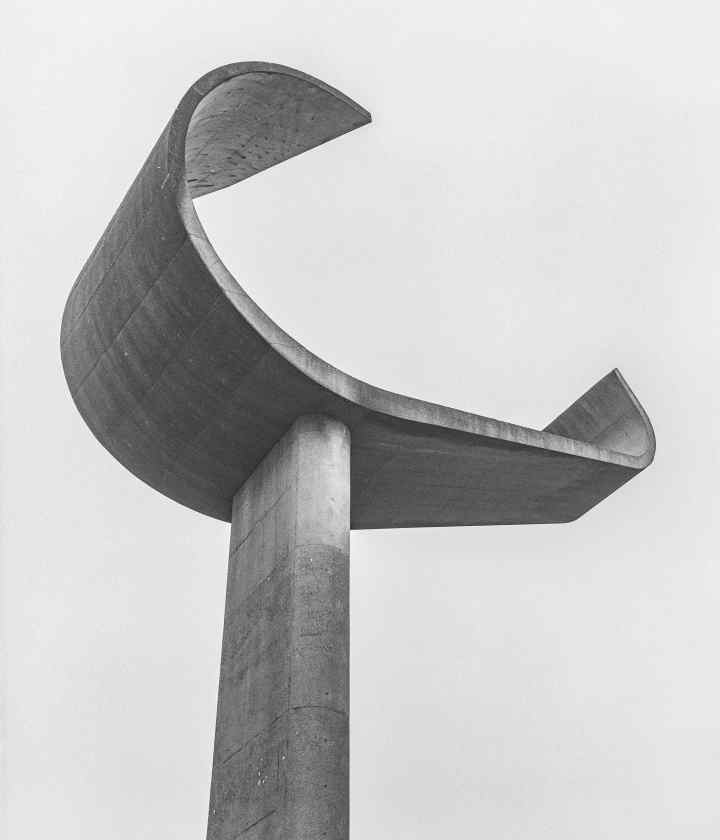
Belgian artist and architect Jacques Moeschal (1913–2004) wanted to bring art to the urban environment, breaking down the boundaries between sculpture, architecture and the landscape. Although his work as an architect is under-recognized compared with his artwork, his background in architecture was fundamental to his creation of monumental sculpture. The thin line between sculpture and architecture defines Moeschal’s oeuvre. Moreover, his few theoretical texts show how his work was embedded within the larger international discussion of the time: namely the ethical demand that art should be made available to a broader public and that it should be integrated with architecture, public space and everyday life.
Moeschal gained international acclaim through his role as the Deputy-Chairman of the International Sculpture Symposium, his participation in several symposia, and through the Civil Engineering Pavilion at Expo 58 in Brussels. It was with his experience at the World Fair that his practice pivoted towards architecturally-scaled sculptures. (…)
Kasper Akhøj, Signals # Aalbeke, 2021. His desire to work in public spaces was enhanced by his role as the Deputy-Chairman of the International Sculpture Symposium. The topics discussed in these symposia usually dealt with sculpture in public spaces and promoted sculpture on a monumental scale. His involvement would become the basis for the construction of his Signals sculptures along the motorway. By installing these Signals, he contributed to growing discussions on public art. Moeschal was the key figure in cementing the place of concrete sculptures on the roadside. Through his energetic network built through winning institutional support (such as the Belgian Ministry of Public Works, Brussels and the Intercommunal Transport Company), his conceptualization would become a driving force in the internationalization of concrete sculpture along the road.
***
Publications:
Jacques Moeschal: Architecture Sculptures
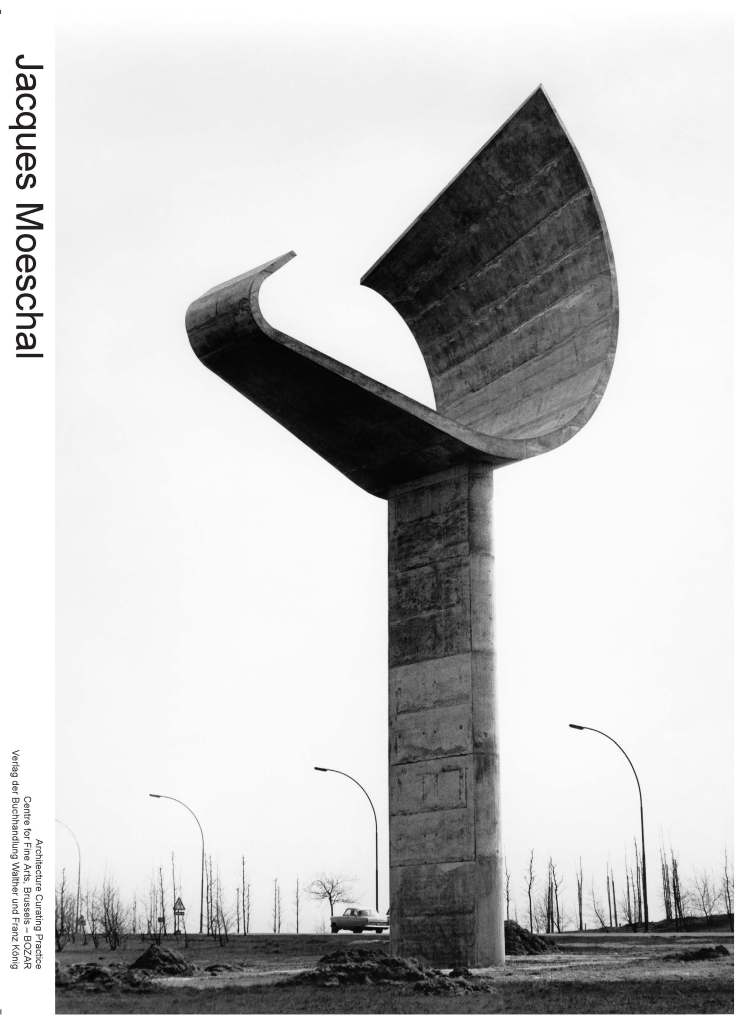
This publication delves deep into the archives of sculptor-architect Jacques Moeschal (1913-2004), known for his monumental concrete sculptures that turned Belgian car trips into art trips. His highly detailed design drawings are works of art in themselves, reproduced here on two papers alongside historic photographs. It zooms in on the relationship between art and architecture in the underexposed oeuvre of Moeschal, through rare archive materials, such as sketches, technical drawings, models, photographs, as well as contemporary images. Contemporary artists including Kasper Akhøj and Barney Kulok demonstrate how Moeschal’s work remains relevant today.
Concept by Angelique Campens and edited by Angelique Campens, Roxane Le Grelle & Iwan Strauven. Brussels 2021. 22 x 31.5 cm. 180 p. with partly col., partly full-page. ill., bibliography, paperback.
With contribution by Kasper Akhøj, Angelique Campens, Francelle Cane, Adrien de Hemptinne, Maxime Delvaux, Valéry Didelon, Ann Veronica Janssens, Barney Kulok, Sophie Lauwers, Roxane Le Grelle, Jacques Moeschal, Iwan Strauven
Designed by Justine De Spiegelaere.
ISBN: 9783753300351
https://www.buchhandlung-walther-koenig.de/
Jacques Moeschal, Signal
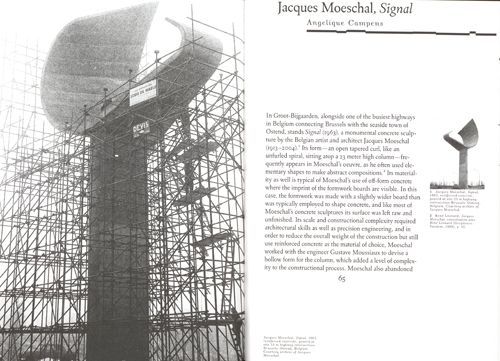
In Groot-Bijgaarden, alongside one of the busiest highways in Belgium connecting Brussels with the seaside town of Ostend, stands Signal (1963), a monumental concrete sculpture by the Belgian artist and architect Jacques Moeschal (1913–2004). Its form—an open tapered curl, like an unfurled spiral, sitting atop a 23 meter high column—frequently appears in Moeschal’s oeuvre, as he often used elementary shapes to make abstract compositions. Its materiality as well is typical of Moeschal’s use of off-form concrete where the imprint of the formwork boards are visible. In this case, the formwork was made with a slightly wider board than was typically employed to shape concrete, and like most of Moeschal’s concrete sculptures its surface was left raw and unfinished. Its scale and constructional complexity required architectural skills as well as precision engineering, and in order to reduce the overall weight of the construction but still use reinforced concrete as the material of choice, Moeschal worked with the engineer Gustave Moussiaux to devise a hollow form for the column, which added a level of complexity to the constructional process. Moeschal also abandoned (…)
In: Trading Between Architecture and Art : Strategies and Practices of Exchange, ed. Wouter Davidts, Susan Holden, and Ashley Paine (Amsterdam: Valiz, 2019): 64-73
Concrete sculptures along the road: Moeschal, Székely and Goeritz in the 1960s

This article examines a series of projects and proposals concerned with sculptures built alongside highways. It aims to illuminate an understudied history of architectural sculpture in concrete (béton), taking us beyond the traditional canon or works. These sculptures are significant within the history I trace because they are not merely influenced by architecture, but actively engage architectural forms as part of their construction of a shared private–public space along the roadside. By analysing categories such as scale, shape, mass, proportion, technological principles and the materials of the work, alongside the public context, my broader research agenda is to trace the ways in which architecture figures within and against these sculptural works. The article also traces some of the history of how art along the highway was connected through the network of the International Sculpture Symposium. The ideas that were disseminated by the different International Sculpture Symposia were important to an increasing degree and for bringing art out of museums and into public space.
In: SCULPTURE JOURNAL 27.2 (2018): 205–223.
***
Exhibition
Jacques Moeschal: Architecture Sculptures
From May 19 to September 19, 2021
Bozar, Brussels
The exhibition zooms in on the relationship between art and architecture in the underexposed oeuvre of Moeschal, through blueprints, film excerpts, models, and interventions by contemporary artists.
contemporary artists: Kasper Akhøj, Ann Veronica Janssens, Barney Kulok
curator: Angelique Campens
co-curators: Roxane Le Grelle and Iwan Strauven
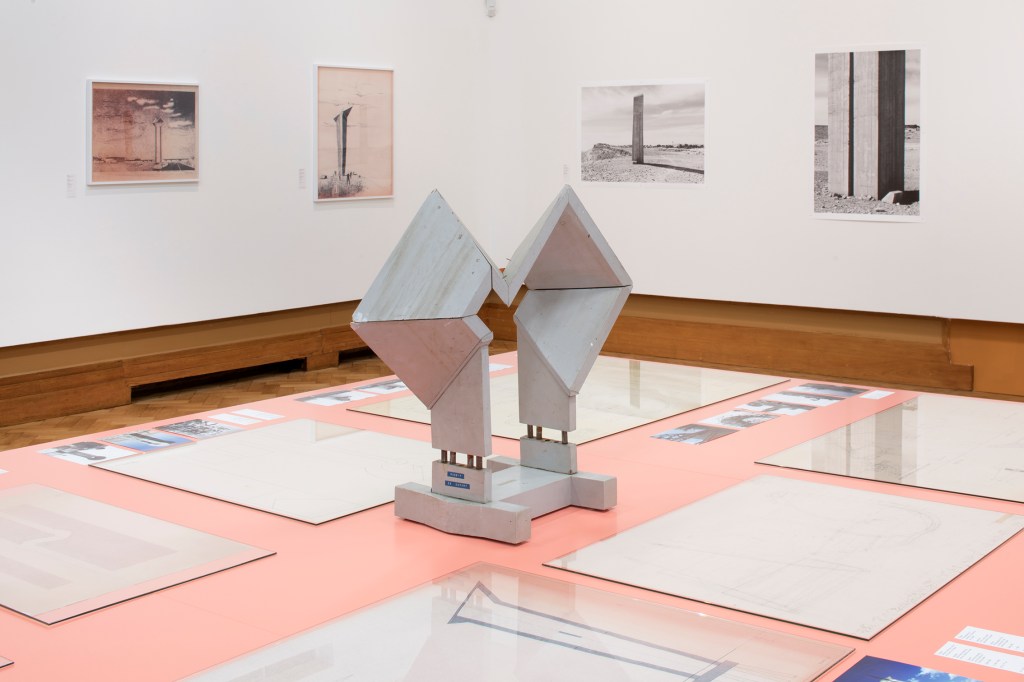
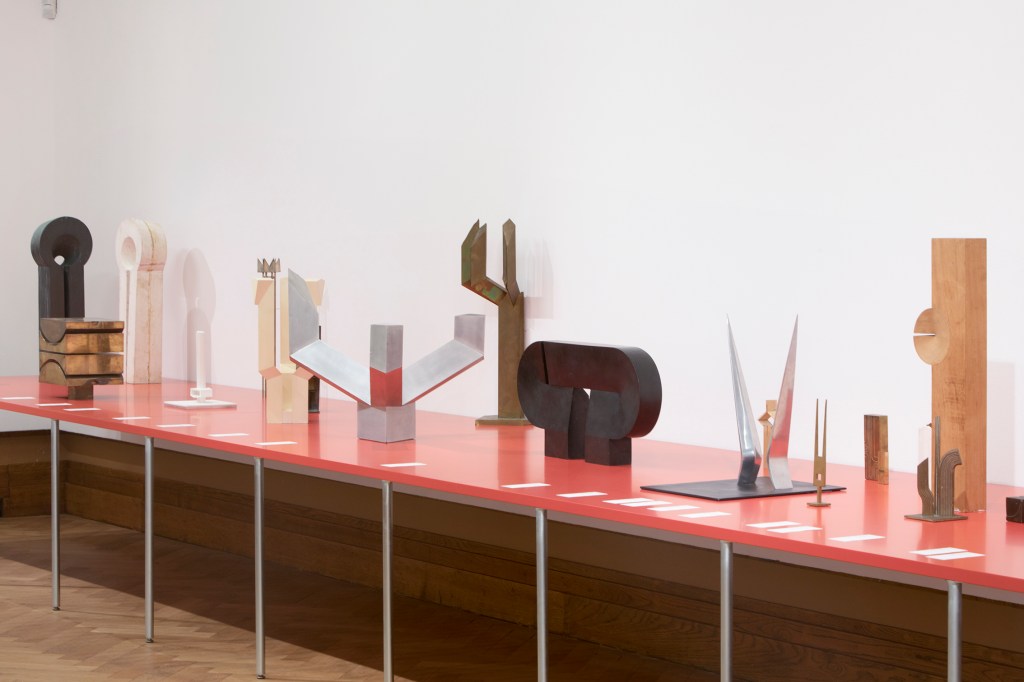
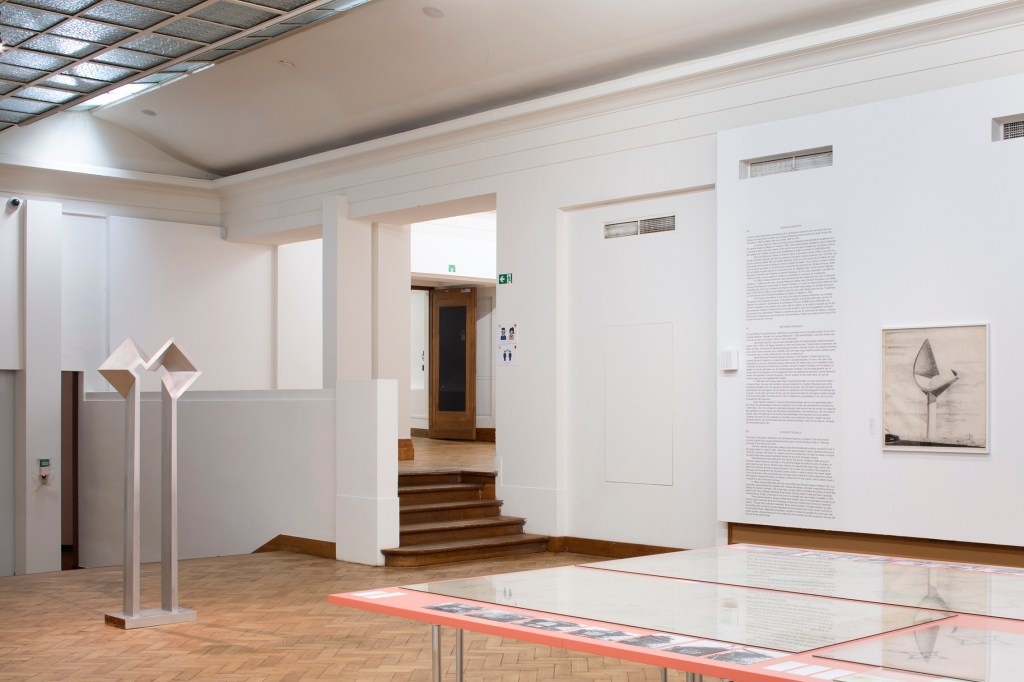
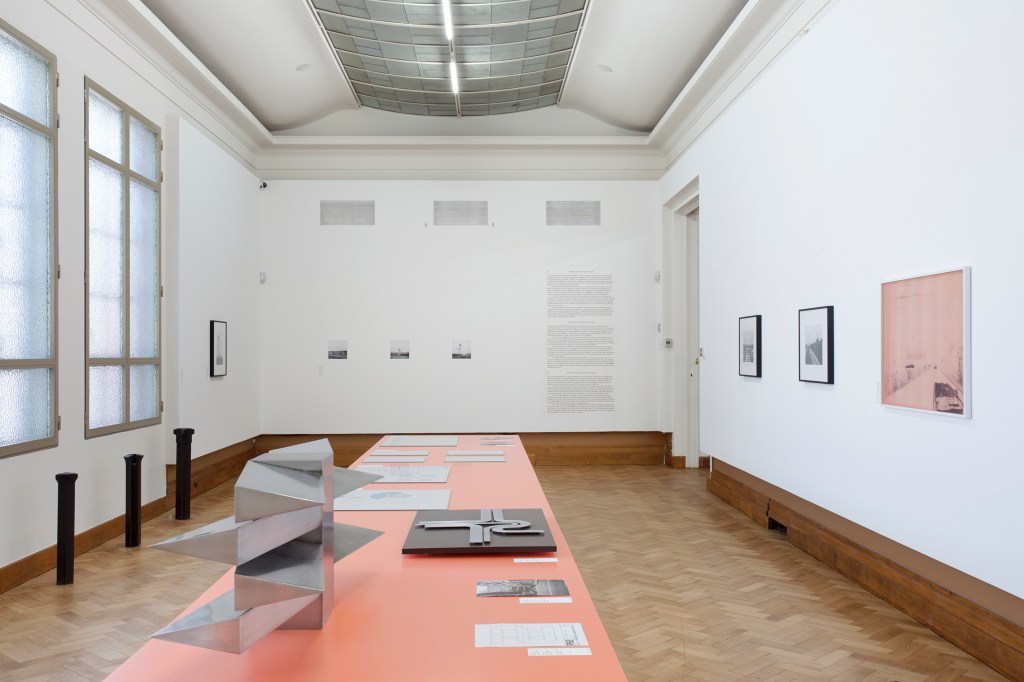
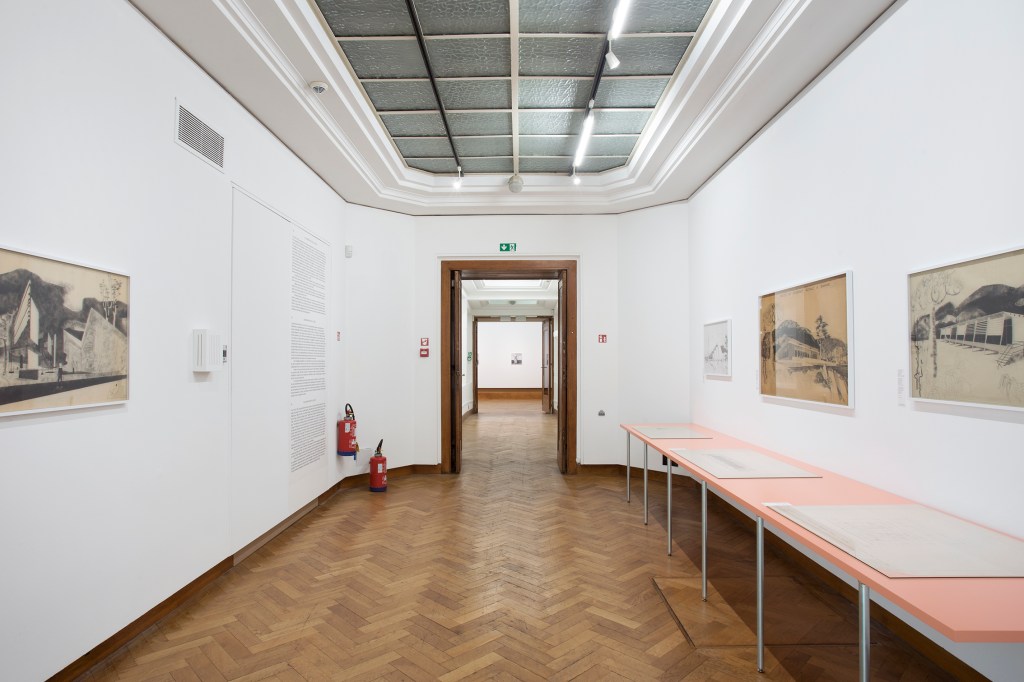
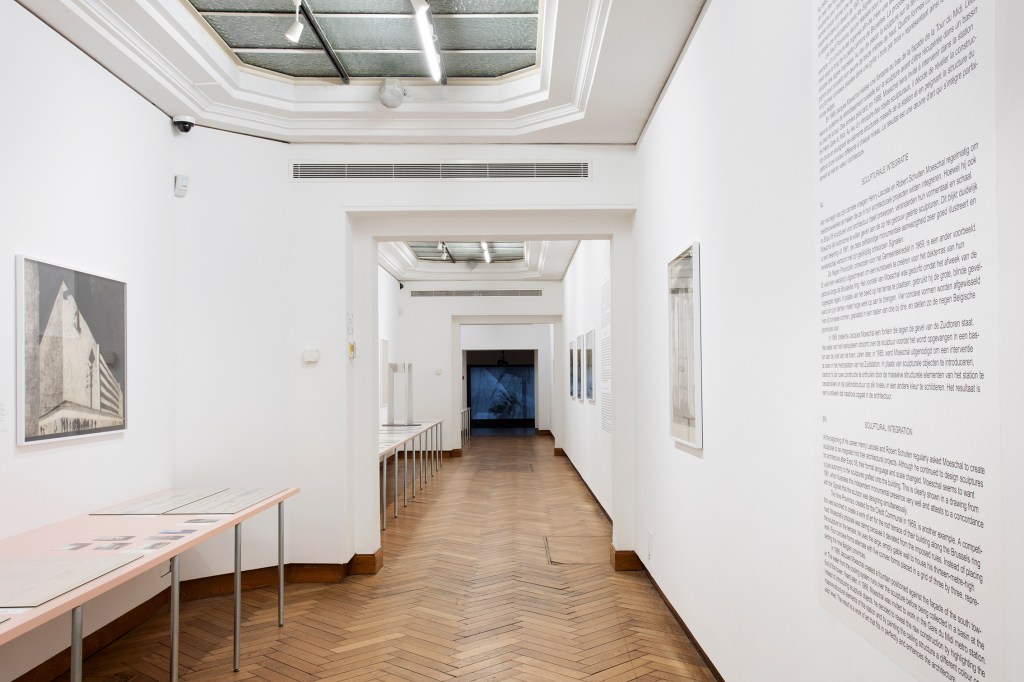
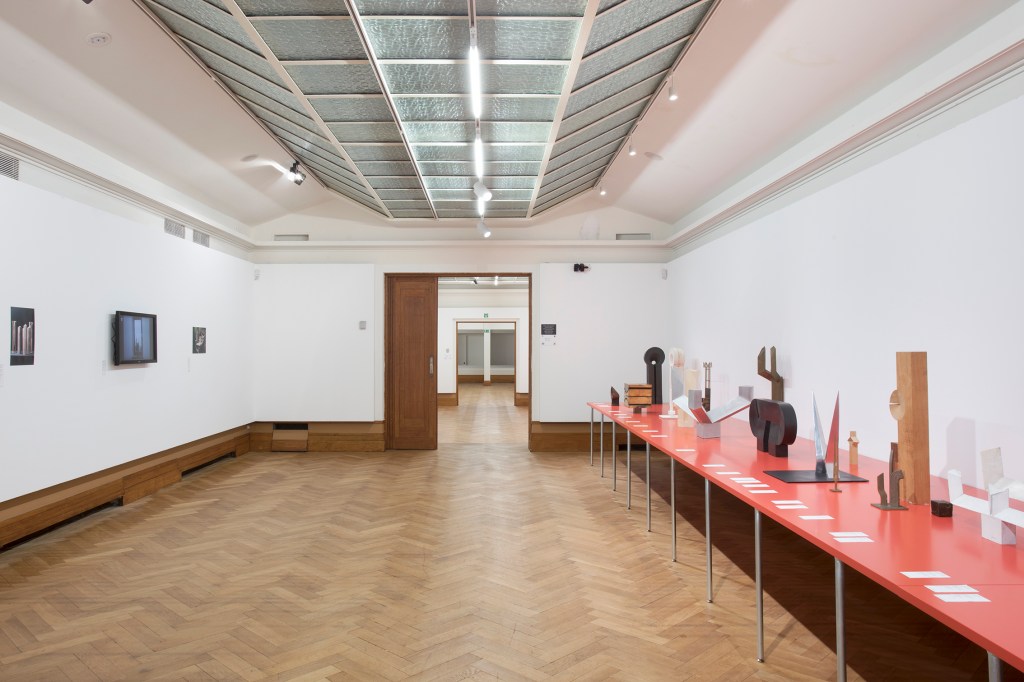
Installation views: (c) Maxime Delvaux